TPLO surgery for dogs is an orthopedic operation used to improve knee stability after cranial cruciate ligament disease. TPLO stands for tibial plateau leveling osteotomy. The surgeon changes the orientation of the upper shinbone and secures the bone with a plate and screws while it heals. [1]
Unlike ligament reconstruction, TPLO does not replace the damaged ligament. It changes the forces acting through the knee during weight-bearing. Understanding this difference helps explain why controlled activity remains essential even when a dog starts walking more comfortably. [1]
Why Do Dogs Need Cruciate Ligament Treatment?
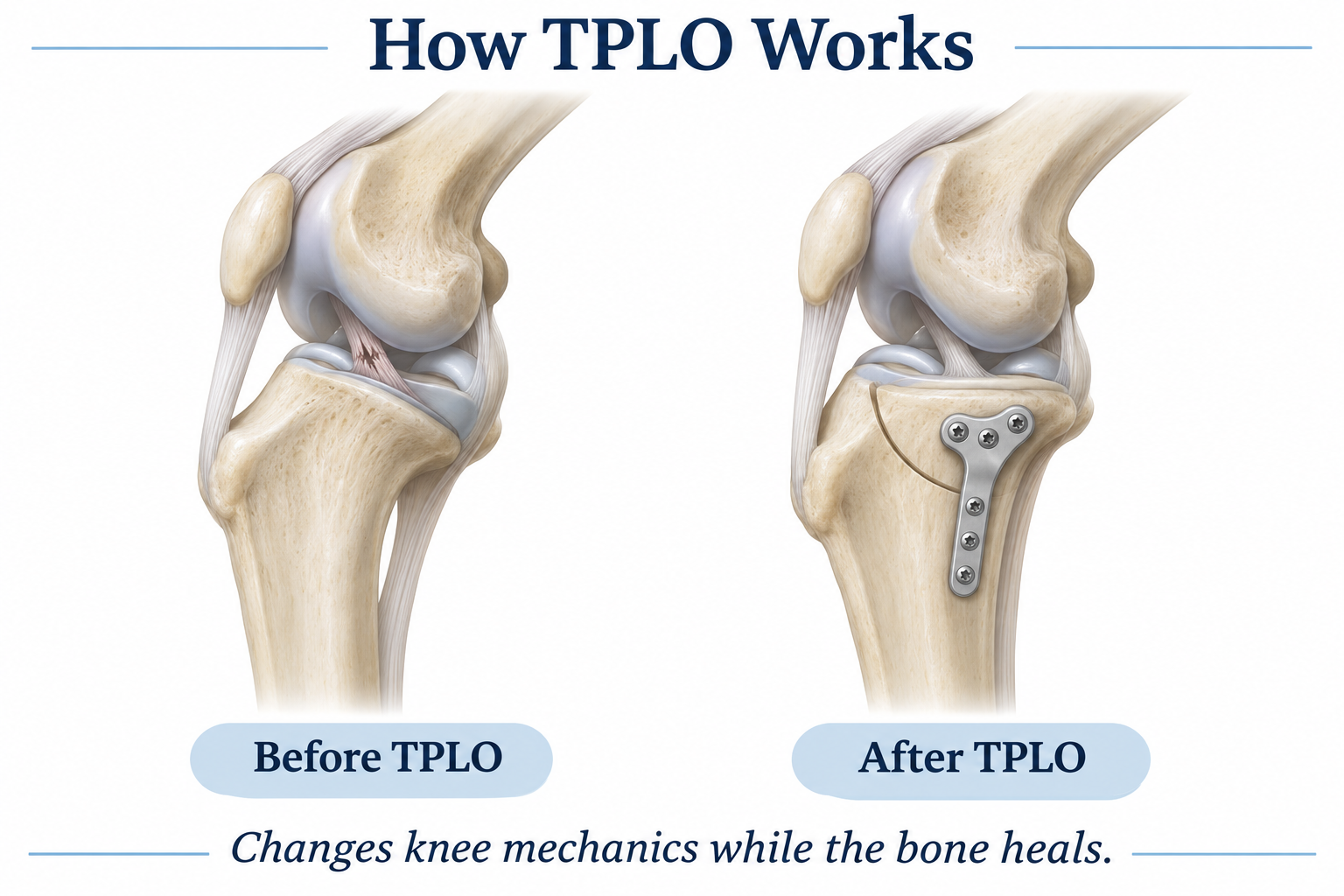
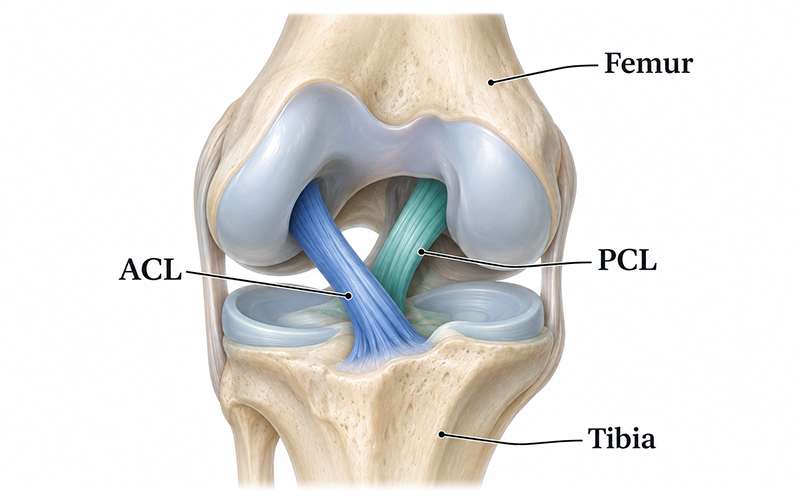
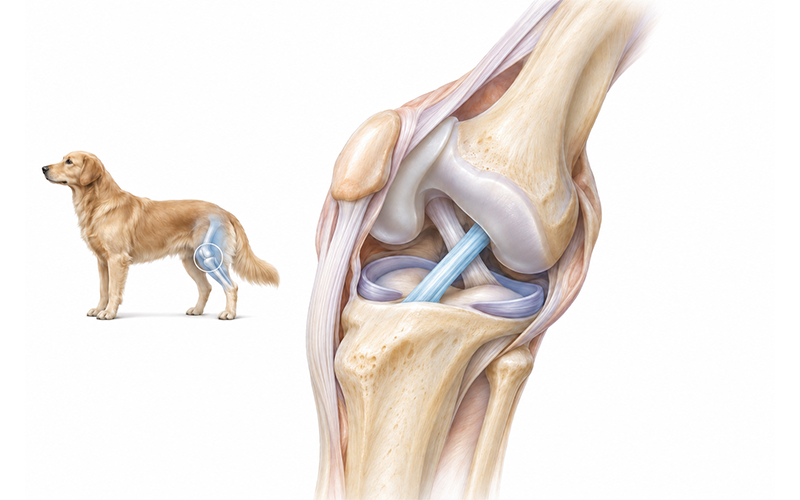
The cranial cruciate ligament, or CCL, helps stabilize a dog’s knee, also called the stifle. It performs a role similar to the human anterior cruciate ligament, or ACL. This is why owners often search for “dog ACL surgery,” although CCL is the usual veterinary term. [2]
When the ligament weakens or tears, abnormal movement can make the joint painful. In dogs, the problem often involves gradual ligament deterioration rather than one clearly identifiable accident. Damage can also affect the menisci, the cushioning structures within the joint. [2]
What Signs Might an Owner Notice?
Possible signs include hind-leg limping, difficulty rising, reduced willingness to use stairs and shifting weight away from one leg. Signs may be intermittent or become suddenly more pronounced. [2]
These changes do not establish a diagnosis. A veterinary examination is needed to distinguish cruciate disease from other causes of lameness. Do not try to test the knee’s stability at home.
How Does TPLO Work?
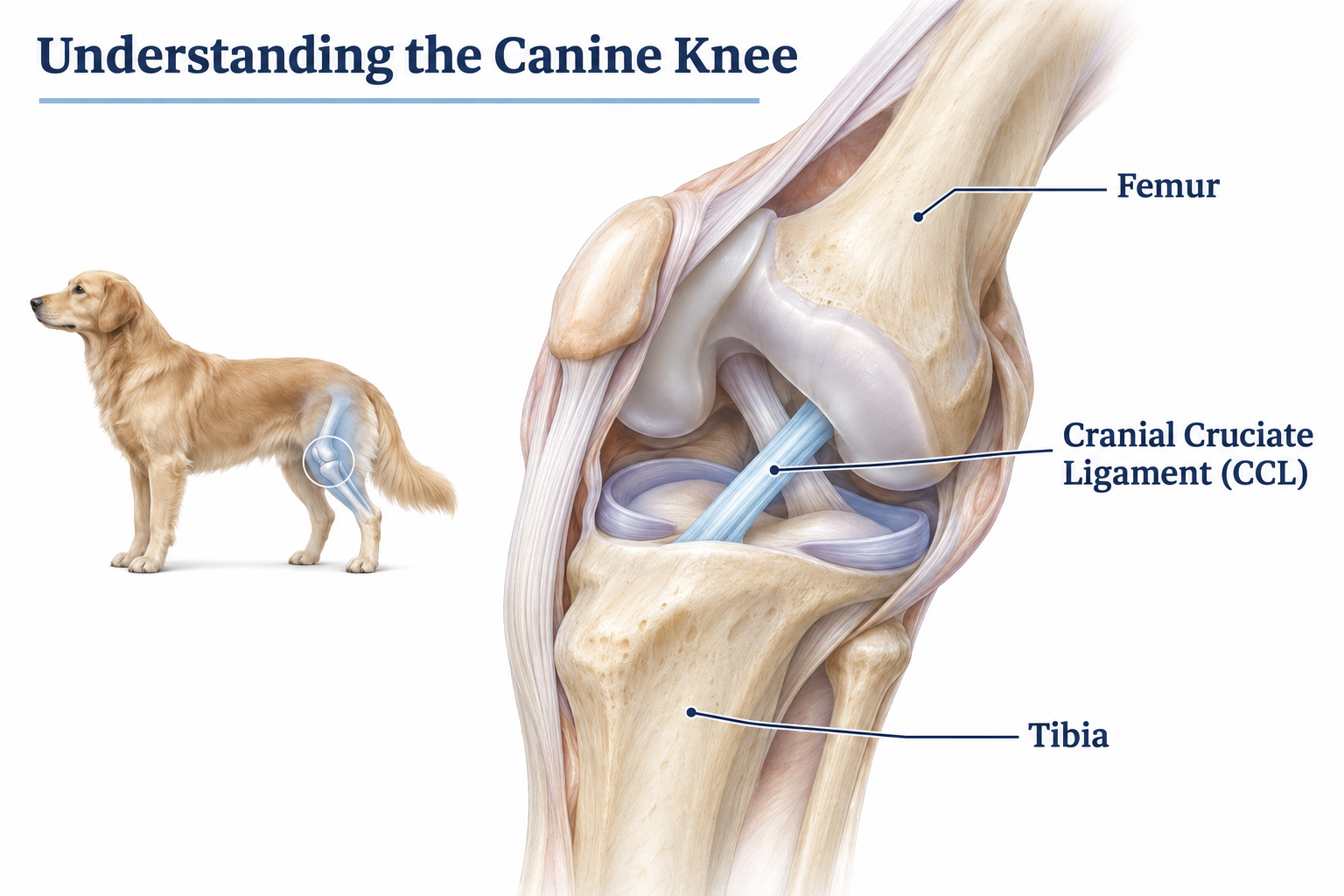
The upper surface of the tibia is called the tibial plateau. With cruciate ligament dysfunction, forces during weight-bearing can contribute to abnormal movement between the shinbone and thighbone. [6]
TPLO addresses this mechanically. The surgeon makes a planned curved cut in the upper tibia, rotates the segment and stabilizes it in a new position. The objective is to reduce the abnormal forward thrust associated with loading the limb. [6]
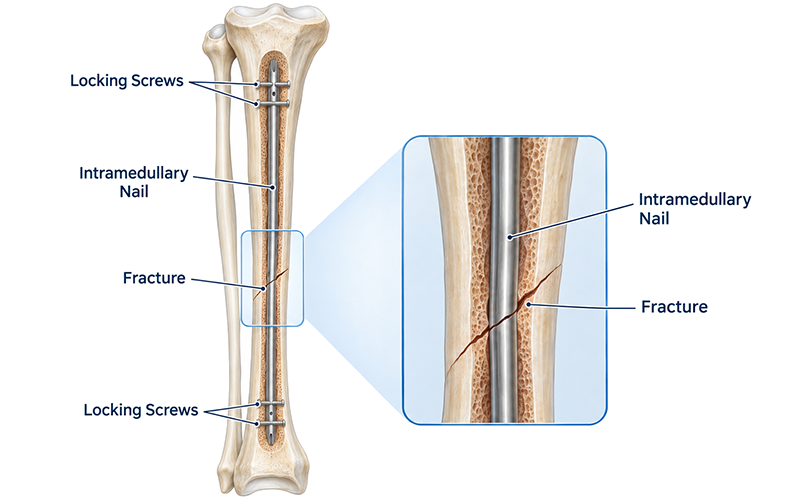
The plate and screws support the bone during healing. They do not make the bone immediately ready for running or jumping. A dog appearing more comfortable is therefore not sufficient reason to end the prescribed restrictions. [3]
Is TPLO Suitable for Every Dog?
No single treatment suits every patient. The veterinarian considers size, activity, knee instability, anatomy and overall health when discussing options. Surgical and nonsurgical approaches both require an individual assessment. [1]
TPLO is frequently discussed for larger or active dogs, but it is not limited to those groups. Owners should ask why it is recommended for their particular dog and how the alternatives compare. [1]
TPLO vs. TTA: What Is the Difference?
Both procedures change knee mechanics, but they alter different parts of the tibia.
| Procedure |
General principle |
| TPLO |
Rotates a segment of the upper tibia to change the tibial plateau orientation. |
| TTA |
Advances the tibial tuberosity, where the patellar ligament attaches. |
Both involve bone healing and a period of controlled activity. The choice depends on the dog and the surgeon’s assessment; this comparison is not a recommendation that one operation is best for every patient. [3]
What Happens Before TPLO Surgery?
The team examines the knee, reviews the dog’s health and obtains imaging for planning. Anesthetic assessment may include blood tests. X-rays help with surgical measurements, although they do not directly display the cruciate ligament itself. [2,3]
Before admission, ask about:
- Preparation and medication instructions.
- The expected hospital stay.
- How to assist your dog safely at home.
- Wound checks and follow-up imaging.
- The full treatment estimate, including rechecks and rehabilitation.
A written plan makes it easier for everyone caring for the dog to follow the same instructions.
How Long Does TPLO Recovery Take?
TPLO recovery takes place over weeks and months. Skin healing, bone healing and restoration of muscle function are separate milestones. [4,5]
Cornell describes an eight-to-twelve-week restriction period in one clinical discussion, with fuller recovery taking longer. The University of Florida describes a more prolonged restriction plan. These examples show why an online timeline should not replace the operating surgeon’s instructions. [3,5]
There is no universal date for normal activity. Follow-up examinations and X-rays help the team decide when exercise can progress. [3]
Caring for Your Dog at Home?
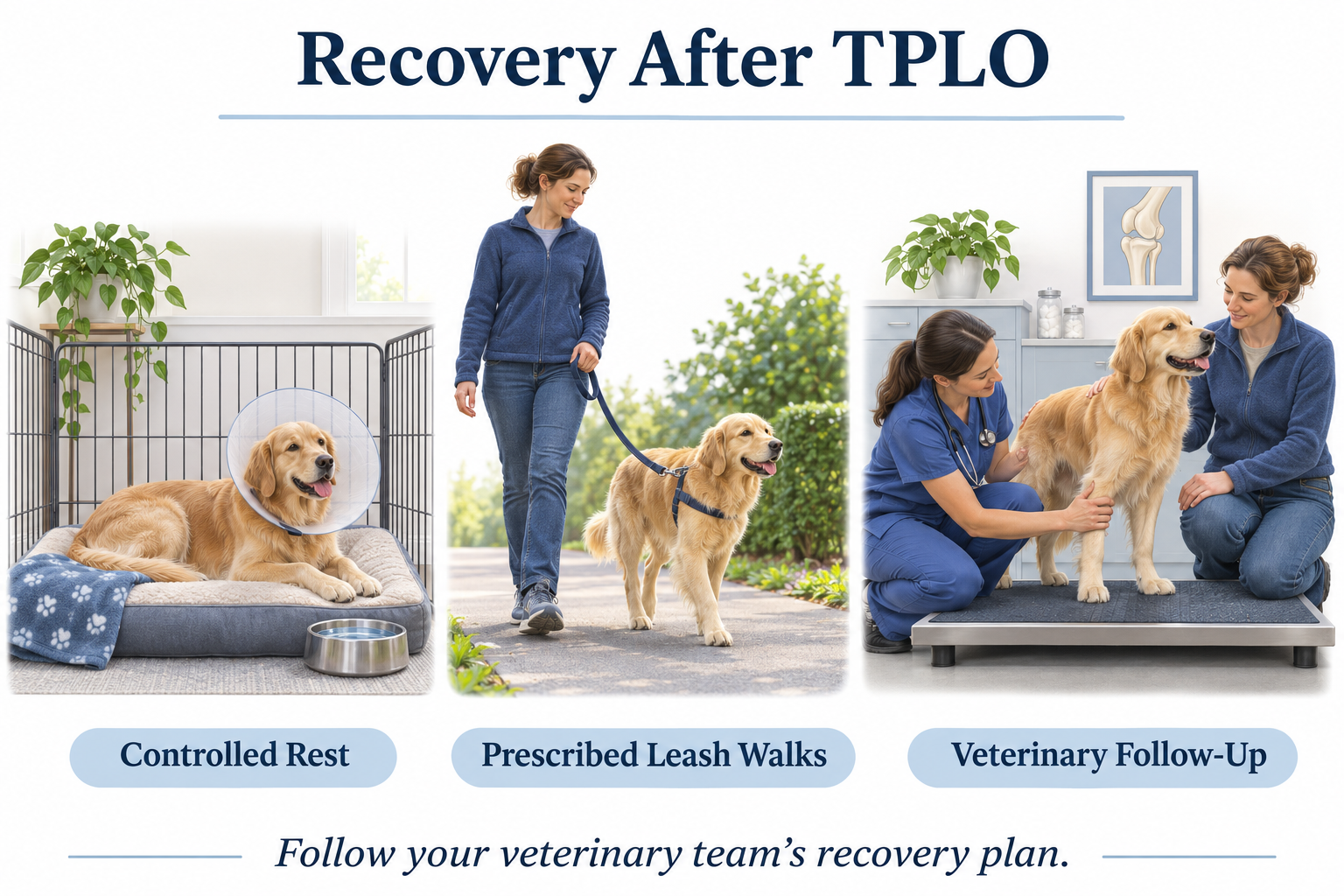
Prepare a controlled recovery area
Arrange a quiet, confined space without access to furniture. Activity is tightly controlled during early recovery. Prevent running, jumping and rough play, including unsupervised activity in the garden. [3,4]
Follow the prescribed walking plan
Toilet trips and exercise walks should follow the veterinary team’s instructions. Ask how to manage stairs, slippery surfaces or a dog that is difficult to support. Do not increase walking simply because your dog seems eager. [3]
Protect the incision
Use the recommended protective collar to prevent licking. Arrange the wound check as instructed; this is often around two weeks, depending on closure and progress. [4]
Give medication exactly as directed
Use only medicines authorized for your dog and follow the discharge instructions. Ask the clinic what to do if a dose is missed or your dog appears uncomfortable. Do not independently add human pain medication.
Discuss rehabilitation
A veterinary rehabilitation plan can help rebuild strength and movement. Exercises should be selected for the dog’s current stage of healing. Swimming or hydrotherapy should not begin without approval. [7]
What Are the Risks of TPLO?
Possible complications include infection, implant problems, bone fracture, meniscal injury and continued lameness. Some problems require additional treatment or surgery. [1]
Exercise restrictions are a practical part of protecting the healing bone and fixation. They remain important even when the incision looks healed. [3]
Contact the veterinary team promptly for increasing wound redness, discharge, wound opening, worsening pain or a sudden deterioration in leg use. Severe distress, collapse or breathing difficulty warrants emergency veterinary care. Keep the clinic’s after-hours contact information available.
Will My Dog Be Normal After TPLO?
Many dogs improve substantially, but an individual result cannot be guaranteed. Surgery improves stability; it does not reverse every existing joint change or eliminate the possibility of arthritis. [1,4]
Long-term care may include weight management, appropriate exercise and veterinary follow-up. The other knee may also develop cruciate disease, so report new limping rather than assuming it is part of the operated leg’s recovery. [4]
Frequently Asked Questions
Does TPLO replace the torn ligament?
No. It changes the knee’s mechanics to improve stability during weight-bearing. [1]
Does walking on the leg mean the bone has healed?
No. Early limb use and completed bone healing are different. Follow the prescribed activity plan. [3]
Must the plate and screws be removed?
Usually they remain in place. Removal may be considered if a problem such as infection or irritation develops. [1]
How much does TPLO cost?
Costs vary by location, hospital and the dog’s needs. Request an itemized estimate covering surgery, anesthesia, imaging, medication, rechecks and any rehabilitation.
Can my dog have surgery on both knees?
That requires individual planning. Ask the surgeon how the condition of each knee affects treatment timing and home care.
Veterinary Orthopedic Solutions at Davin Med
TPLO is one area within veterinary orthopedic care. Davin Med’s veterinary portfolio brings together orthopedic implants, surgical instrumentation and related equipment for veterinary professionals and distributors.
Explore Davin Med Veterinary Orthopedic Products for an overview. Professional buyers can request current product information, documentation and supply details. Pet owners should discuss treatment and implant selection directly with their veterinarian.
This article provides general education and does not replace veterinary advice. Follow the surgeon’s instructions for your dog’s procedure and recovery.
References
- American College of Veterinary Surgeons — Cranial Cruciate Ligament Disease
- VCA Animal Hospitals — Cranial Cruciate Ligament Disease in Dogs
- University of Florida Small Animal Hospital — Cranial Cruciate Ligament Rupture
- RCVS Knowledge — Tibial Plateau Levelling Osteotomy
- Cornell University — Two Orthopedic Surgeries Return Retriever to Hiking
- AO Foundation — Tibial Plateau Leveling Osteotomy
- RCVS Knowledge — Rehabilitation