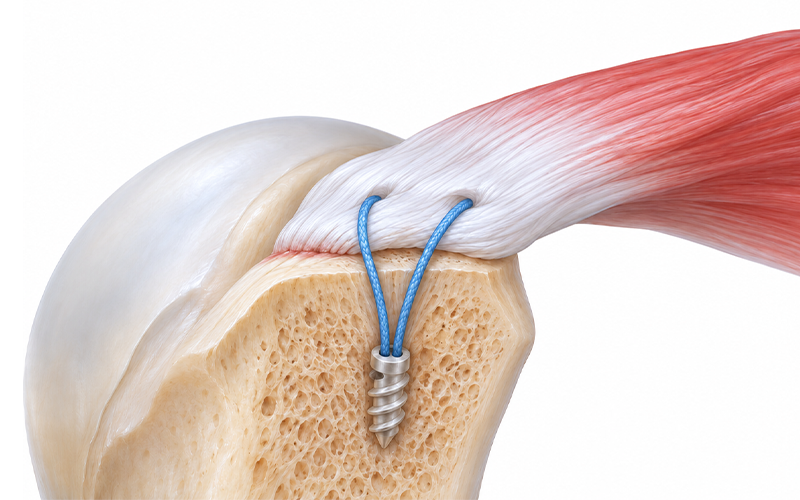
A suture anchor is a small implant that gives a surgeon a point on the bone to secure sutures. Those sutures can hold a torn tendon or ligament against its attachment site while the tissue heals. The anchor provides mechanical support; healing depends on the tissue, the injury and the recovery process. [1]
How Does a Suture Anchor Work?
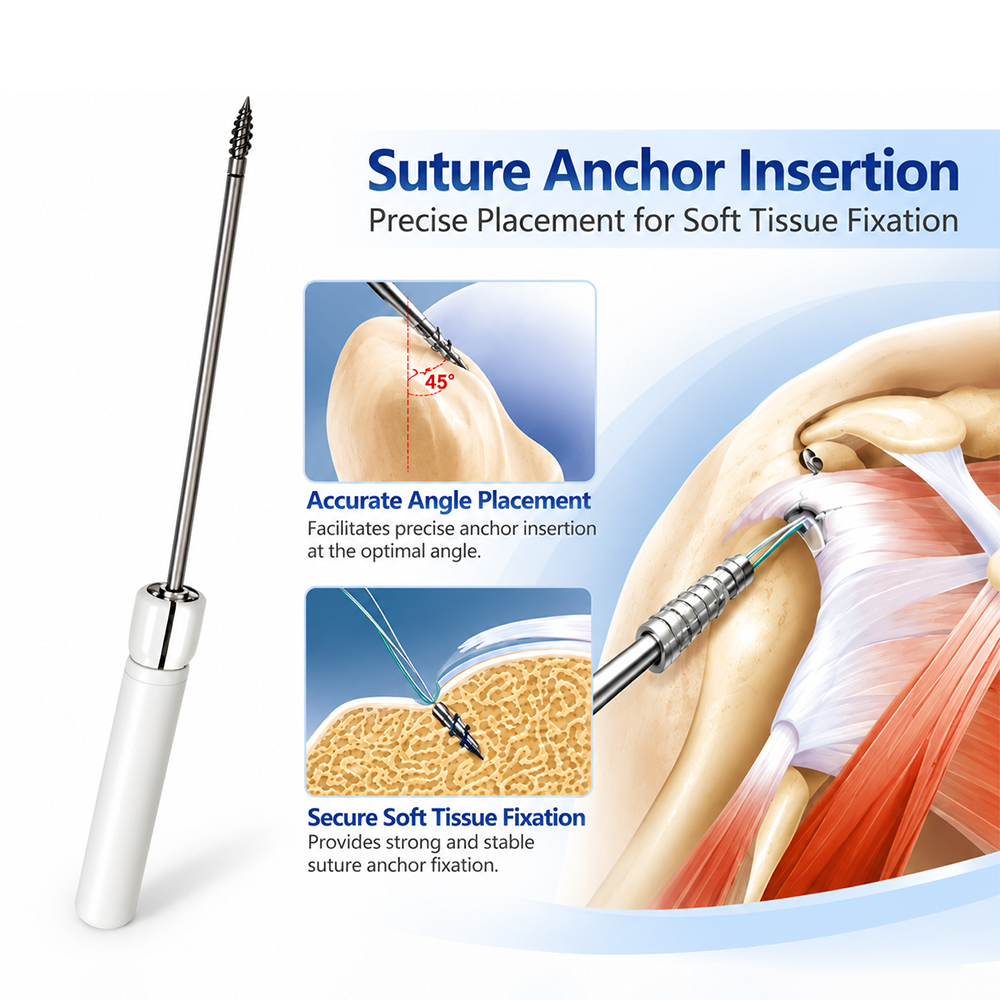
Think of the anchor and suture as two parts of the repair. The anchor grips the bone. The suture or tape captures the soft tissue and holds it against the intended attachment site. Depending on the design, the surgeon secures the suture with a knot or with a locking mechanism in the anchor. [1]
The goal is to keep the tissue in contact with bone during early healing. A secure anchor at the end of surgery does not mean the tendon or ligament has already healed.
Where Are Suture Anchors Used?
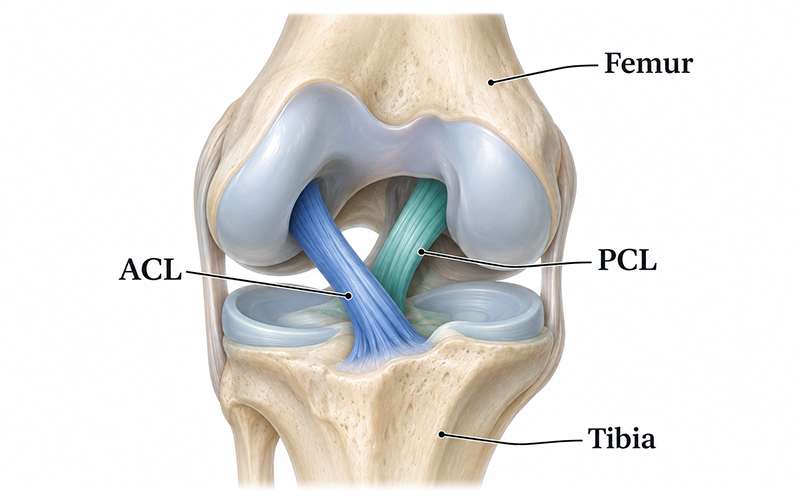
Rotator cuff repair is a common example. When a repairable tendon has torn away from the upper arm bone, an anchor can help hold the tendon against its attachment site. Anchors can also be used in selected ligament repairs, including procedures involving the medial collateral ligament of the knee. Whether an anchor is appropriate depends on the specific injury and repair. [1,2]
Metal, PEEK and All-Suture Anchors: What Is the Difference?
| Anchor type |
What the name describes |
| Metal anchor |
A rigid anchor body made of metal, such as titanium. |
| PEEK anchor |
A rigid body made of polyetheretherketone, a nonabsorbable polymer. |
| All-suture anchor |
A flexible textile anchor that expands or bunches inside a prepared bone hole when deployed, depending on the design. |
These labels describe what grips the bone. Knotted and knotless, by contrast, describe how the suture is secured. For example, a PEEK anchor can be knotless. A knotless repair still uses suture or tape; the device holds it without requiring a knot at that fixation point. [1]
Is One Anchor Type Better Than the Others?
There is no universal ranking. The choice depends on factors such as the repair site, bone quality, available space and the way the surgeon plans to secure the tissue. A laboratory test can measure how a particular construct behaves under repeated loading or how much force it withstands before failure. Those results do not establish which device produces better healing in patients. [1,2]
The anchor is also only one part of the construct. A repair can lose fixation at the bone, at the suture or at the tissue. Choosing an anchor therefore involves considering the entire repair rather than comparing a single strength figure. [1,2]
What Does an Anchor Mean for Recovery?
Recovery instructions are based on the operation and the tissue being repaired. For example, a shoulder tendon repair and a knee ligament repair place different demands on the healing tissue. Ask your surgical team which movements are permitted, when rehabilitation should begin and what milestones determine a return to lifting, work or sport. The implant material alone cannot answer those questions.
Frequently Asked Questions
Is a suture anchor the same as a bone screw?
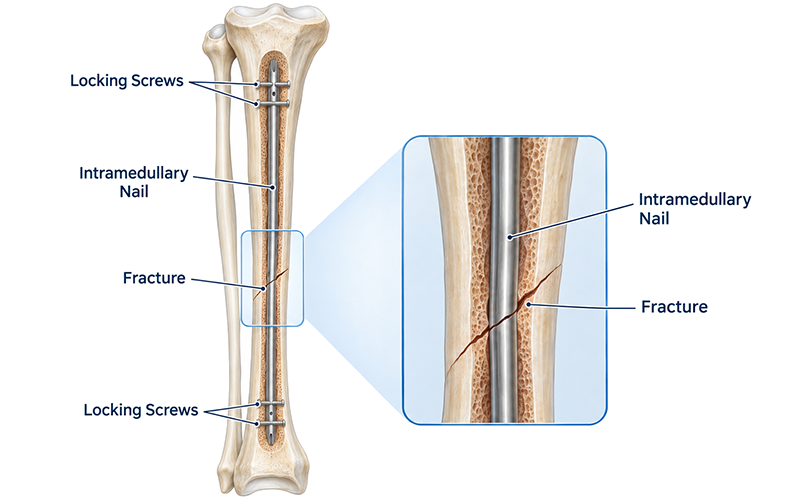
Some anchors have threads and look like small screws. Their purpose is to secure sutures to bone, whereas a fracture screw typically holds bone fragments together or attaches a plate to bone.
Does an all-suture anchor dissolve?
“All-suture” describes the construction, not whether it is absorbable. Check the specific device information rather than assuming it will dissolve.
Does a knotless anchor mean no stitches are used?
No. “Knotless” refers to how the repair suture is locked at the anchor. It does not describe how the skin incision is closed.
Davin Med Sports Medicine
Davin Med’s sports medicine portfolio includes suture anchors and related surgical instruments. Healthcare professionals and distributors can browse Davin Med Suture Anchors and request product specifications, intended-use information and compatible instruments for the model they are evaluating.
This article is for general education. Implant selection and rehabilitation should be discussed with the treating surgeon.
References
- Deichsel et al. — Biomechanical comparison of titanium, all-suture and knotless PEEK anchors in a porcine model
- Three anchor concepts for rotator cuff repair in standardized physiological and osteoporotic bone: a biomechanical study