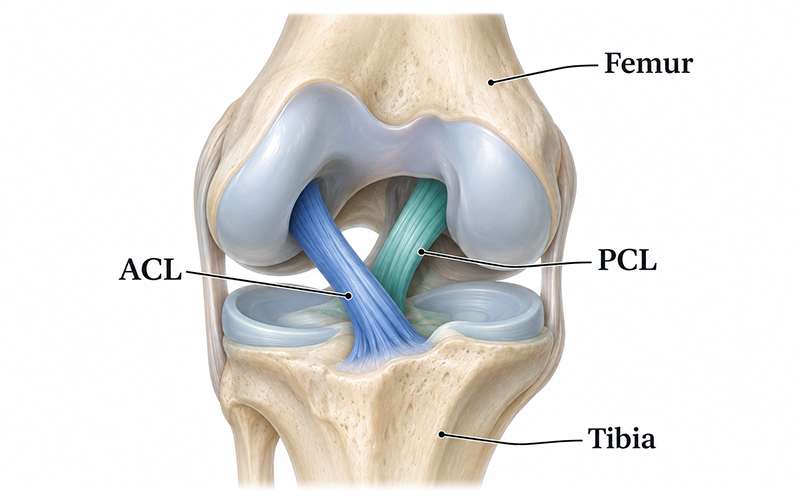
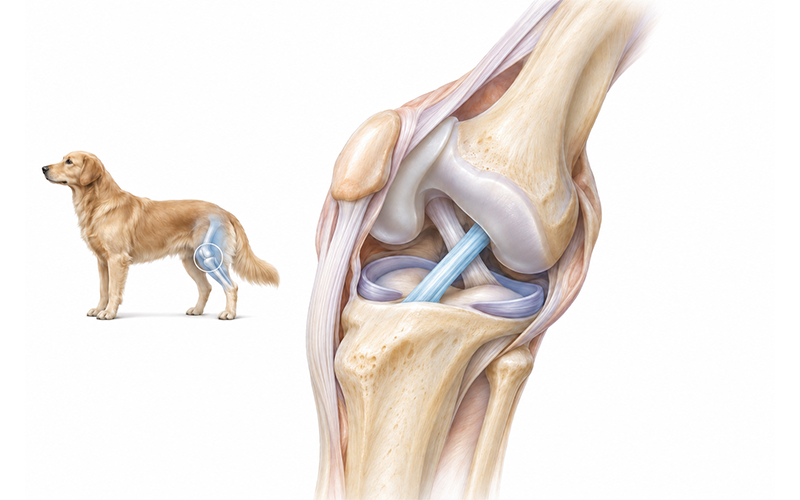
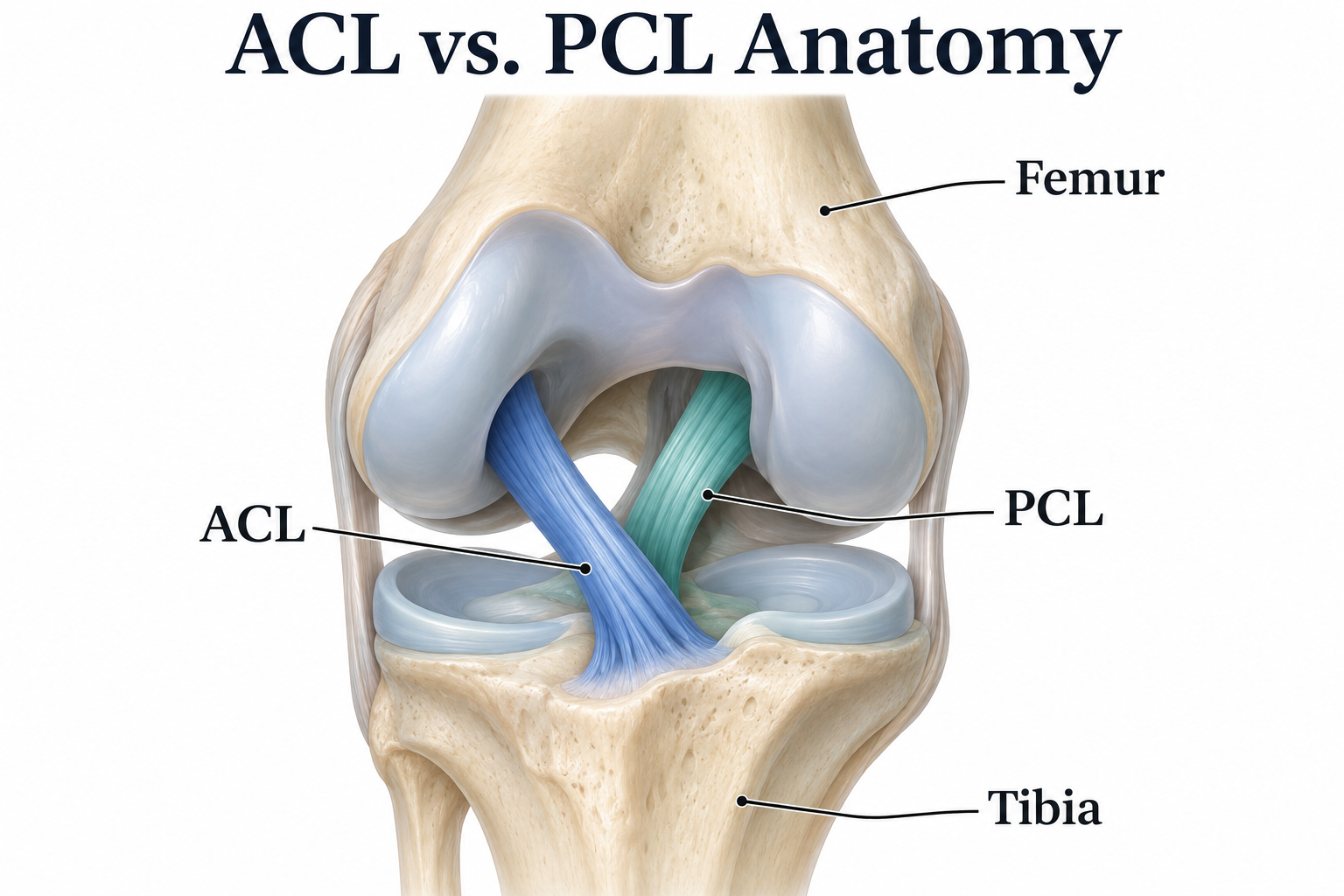
The anterior cruciate ligament (ACL) and posterior cruciate ligament (PCL) both connect the thighbone to the shinbone inside the knee. They cross each other, but control movement in different directions. The ACL helps prevent excessive forward movement of the shinbone and contributes to rotational stability. The PCL limits excessive backward movement. [1,2]
Their injuries can produce similar symptoms, so pain location alone cannot identify which ligament is damaged.
ACL vs. PCL at a Glance
| Feature |
ACL |
PCL |
| Full name |
Anterior cruciate ligament |
Posterior cruciate ligament |
| Position |
In front of the PCL, within the knee |
Behind the ACL, within the knee |
| Main restraint |
Excessive forward shinbone movement; also rotation |
Excessive backward shinbone movement |
| Typical injury setting |
Pivoting, sudden stopping or awkward landing; sometimes contact |
A strong force against the front of the shin with the knee bent; also twisting or hyperextension |
| Treatment |
Rehabilitation, with surgery considered according to instability and activity goals |
Rehabilitation for many isolated injuries; surgery for selected persistent or combined injuries |
These are general patterns, not diagnostic rules. A collision can injure the ACL, and a PCL injury does not require a car accident. [1,2]
How Do ACL Injuries Happen?
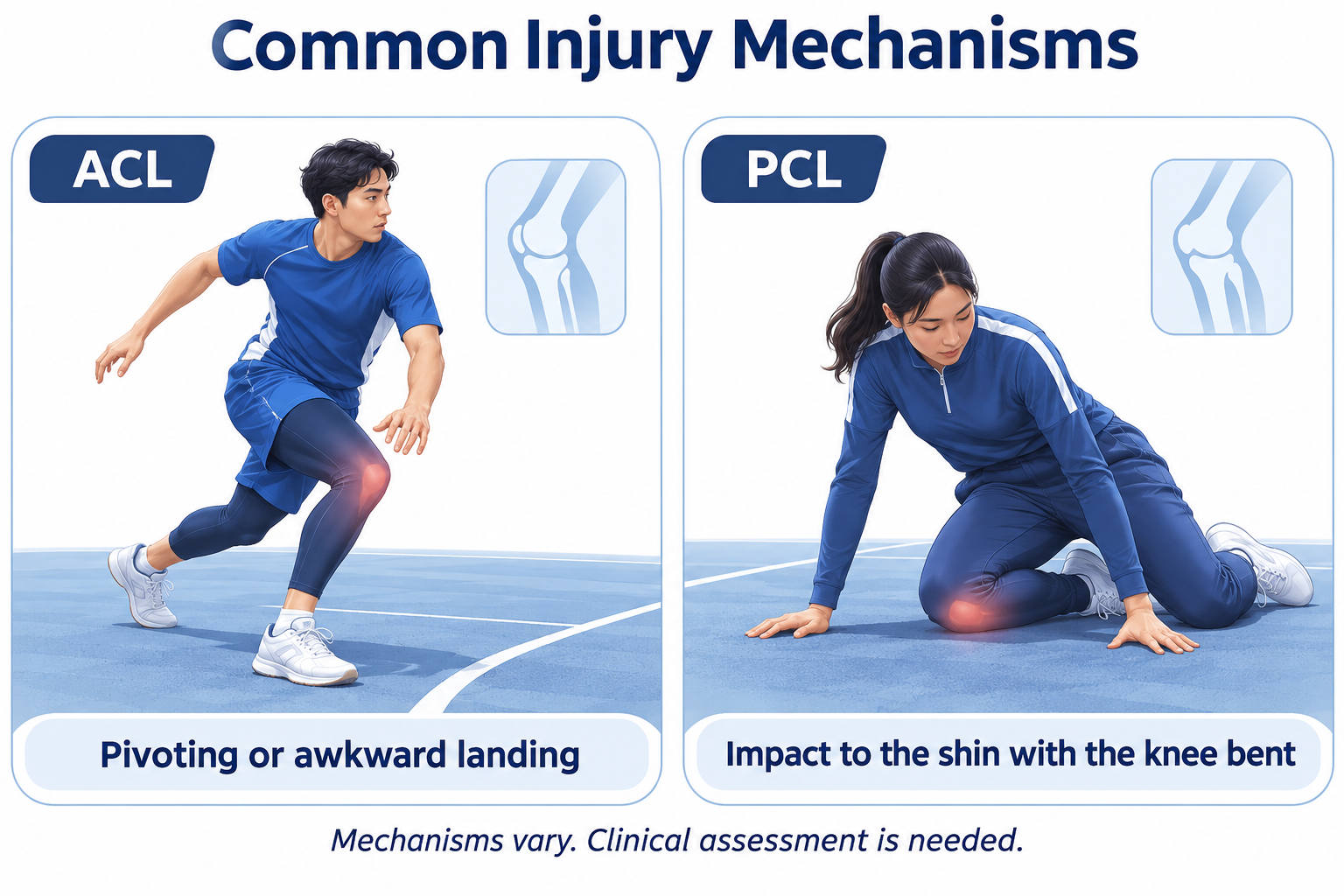
An ACL tear may occur when someone changes direction quickly, decelerates or lands awkwardly. Many injuries occur without another person striking the knee. A popping sensation, early swelling and a feeling of giving way are possible features. [1]
However, hearing a pop does not confirm an ACL tear. Other knee injuries can also cause swelling and instability.
How Do PCL Injuries Happen?
A classic example is a bent knee hitting a car dashboard, forcing the upper shin backward. Falling onto a bent knee during sport is another mechanism. PCL injuries may be less obvious than ACL injuries and can occur alongside damage to other ligaments or cartilage. [2]
A PCL injury should therefore not be dismissed because it is less commonly discussed.
Can Symptoms Tell You Which Ligament Is Torn?
Both injuries can cause pain, swelling, reduced movement and difficulty trusting the knee. Walking ability does not establish that the joint is uninjured. [1,2]
A clinician considers how the injury occurred, examines knee stability and assesses other structures. X-rays help detect bone injury; MRI can evaluate ligaments and associated soft-tissue damage. Imaging is interpreted together with the examination. [1]
Avoid repeatedly twisting the knee or trying home ligament tests to identify the injury.
Does an ACL Tear Always Need Surgery?
No. Treatment depends on functional instability, other injuries and the person’s goals. Rehabilitation may be appropriate for some patients. Surgery may be considered when instability persists or when a person wants to return to activities that place greater rotational demands on the knee. [3]
When surgery is indicated, reconstruction typically uses a tissue graft to replace the damaged ligament’s function. The decision should include the expected benefits, risks and commitment to rehabilitation. [3]
Does a PCL Tear Always Need Surgery?
No. Many isolated PCL injuries can be treated with a structured rehabilitation programme, sometimes with a suitable brace. Persistent pain or instability despite treatment can prompt a discussion about reconstruction. [4]
Combined ligament injuries require a different assessment from an isolated tear. “PCL tears heal without surgery” is therefore too broad a claim, just as “all ACL tears require surgery” is too broad. [2,4]
Which Injury Is More Serious?
Neither label alone determines severity. An isolated injury and a knee with several torn ligaments are very different problems. Associated cartilage, meniscal or bone damage can affect treatment and recovery. [2,5]
Useful questions are: What else is injured? How unstable is the knee? What activities are affected? What outcome is treatment intended to achieve?
ACL vs. PCL Recovery
Recovery depends on whether treatment is surgical or nonsurgical, the extent of injury and progress during rehabilitation. The timetable for ordinary walking is not the timetable for running or competitive sport.
After ACL surgery, rehabilitation usually lasts months, and returning to sport can take around a year. This is an estimate, not automatic clearance. [6]
PCL rehabilitation must account for the ligament’s different function. Treatment plans may use bracing and muscle training to protect against backward movement of the shinbone. An ACL exercise schedule should not simply be reused for a PCL injury. [5]
Return to sport should consider strength, movement control, knee function and readiness, alongside healing time. A date on the calendar alone does not establish that the knee is ready. [7]
Questions to Ask Your Specialist
- Is the injury isolated or are other structures damaged?
- What are the goals of nonsurgical treatment?
- What would make surgery appropriate?
- Do I need a brace or walking aids?
- What restrictions apply to work and exercise?
- Which tests will guide my return to sport?
Frequently Asked Questions
Can the ACL and PCL tear together?
Yes. This is a combined ligament injury and needs assessment beyond the pathway for an isolated tear. [2]
Is PCL reconstruction the same as ACL reconstruction?
Both may use a graft, but the anatomy, reconstruction plan and rehabilitation differ. [3,5]
Can I return to sport once pain settles?
Pain relief alone is insufficient. Follow the rehabilitation team’s assessment of stability, strength and movement. [7]
Does the MRI result decide treatment by itself?
No. Symptoms, examination, associated injuries and activity goals also matter. [1,3,4]
Sports Medicine at Davin Med
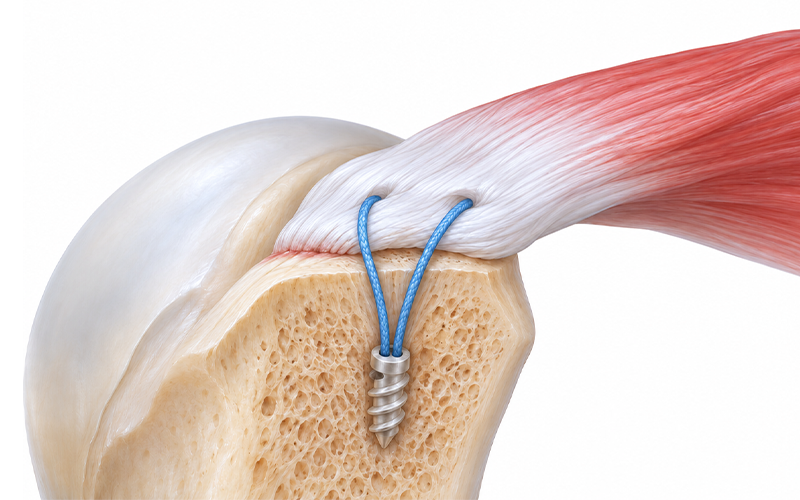
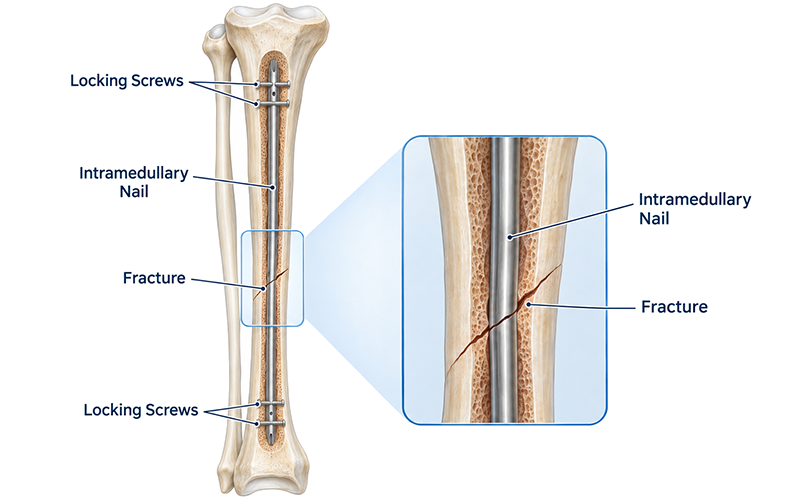
ACL and PCL treatment forms part of the wider field of sports medicine. Davin Med’s portfolio brings together sports medicine implants and surgical instrumentation for healthcare professionals and medical device distributors.
Explore Davin Med Sports Medicine and Arthroscopy Systems for an overview. Professional buyers can request current specifications and supporting documentation. Clinical decisions and device selection remain the responsibility of qualified healthcare professionals.
This article provides general education and does not replace individual medical advice. Seek professional assessment after a significant knee injury.
References
- AAOS — ACL Injuries
- AAOS — PCL Injuries
- AAOS — ACL Injury: Does It Require Surgery?
- University of Michigan Health — PCL Injuries
- International Expert Consensus — Management of PCL Injuries
- NHS — Recovering From ACL Surgery
- British Orthopaedic Association — Best Practice for ACL Injuries