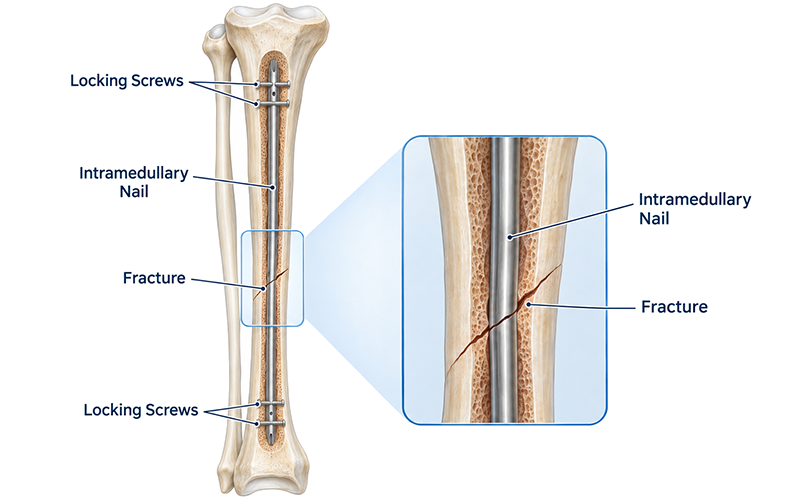
Spinal fusion is surgery intended to join two or more vertebrae—the bones of the spine—so they heal into a connected, stable segment. By stopping movement at selected levels, it may help address instability, correct deformity or reduce symptoms in appropriately selected patients. [1]
The operation does not fuse the entire spine in most cases. Its extent depends on the condition being treated. Understanding the purpose of surgery, the role of implants and the stages of recovery can help patients prepare for an informed discussion with their specialist.
Why Is Spinal Fusion Performed?
A surgeon may consider fusion for certain problems involving spinal stability or alignment. Examples include selected cases of vertebral slippage, spinal deformity, fractures, or instability associated with other conditions. Fusion may also accompany another operation when stabilization is needed. [2]
A diagnosis of back pain, arthritis or a damaged disc does not automatically mean fusion is appropriate. The recommendation should explain which problem surgery aims to address and why the expected benefits justify its risks. Nonsurgical treatment is often considered first, depending on the condition. [1,3]
Before agreeing to surgery, ask: “What is the specific goal of fusion in my case?”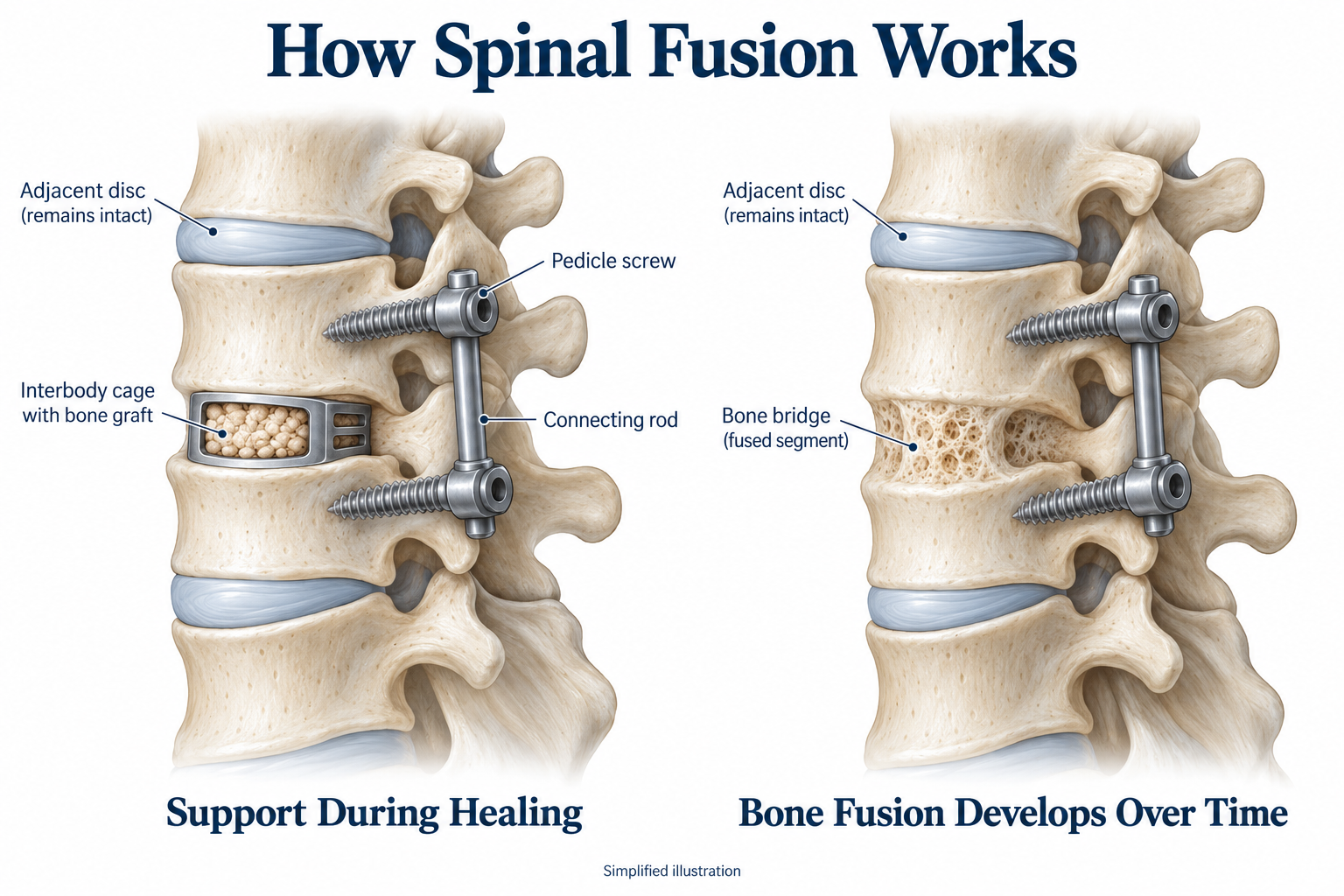
Spinal Fusion vs. Decompression: What Is the Difference?
These terms describe different surgical objectives.
| Procedure |
Main purpose |
| Spinal decompression |
Create more space around compressed nerves or the spinal cord. |
| Spinal fusion |
Join selected vertebrae to limit movement and provide stability. |
| Decompression with fusion |
Address nerve compression and a need for stabilization in the same treatment plan. |
Fusion is sometimes performed alongside procedures that remove pressure from nerves, but the two are not interchangeable. Not every decompression requires fusion. Ask whether your proposed operation includes one or both procedures. [2]
Cervical and Lumbar Spinal Fusion
Cervical fusion involves the neck, while lumbar fusion involves the lower back. The surgical route and recovery instructions vary with the location and extent of treatment. Anterior approaches reach the spine from the front; posterior approaches reach it from behind. [1]
Patients may encounter several technique names. These describe how surgery is performed rather than a ranking of procedures. The surgeon selects an approach according to the anatomy, diagnosis and treatment goals.
How Does Spinal Fusion Work?
Fusion relies on bone healing. The operation creates conditions for bone to grow across the selected segment; that biological process continues after surgery. [4]
Bone graft supports healing
Bone graft provides material that helps a fusion develop. Options can include a patient’s own bone, donor bone or selected graft substitutes. Bone collected locally during surgery may sometimes be reused. Each option has different characteristics, and the choice should be discussed with the surgeon. [8]
Implants provide support
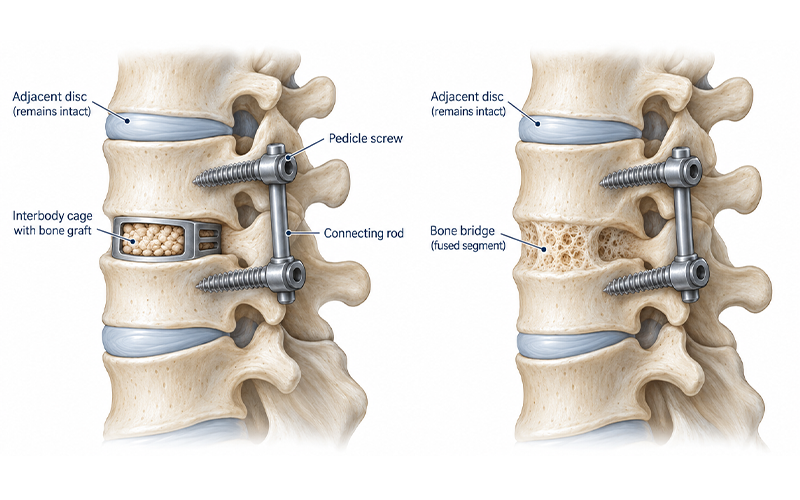
Screws, rods or plates may hold the treated segment stable while healing progresses. Their mechanical support and the later formation of a bone bridge serve related but different roles. Having implants in place does not mean that bone fusion is already complete. [4]
What is an interbody fusion cage?
In an interbody fusion, a spacer or cage is placed in the disc space after disc material is removed. It helps support the space between adjacent vertebrae and works with the fusion construct. PLIF and TLIF are examples of lumbar interbody fusion techniques. [5]
A cage is not an artificial disc designed to preserve movement at that level. The objective of interbody fusion is for the treated bones to unite. [5]
What Happens Before Surgery?
Preparation includes reviewing medical conditions and medicines with the surgical team. Do not independently stop prescribed medication; follow the instructions provided for your operation. [1]
Useful questions include:
- Which spinal levels will be treated?
- What symptoms is surgery expected to improve?
- What alternatives are available?
- Will decompression or an interbody fusion be included?
- What help will I need at home?
- How will the team assess healing?
Arrange practical support for transport, household tasks and follow-up visits. Written discharge instructions are particularly useful because activity restrictions can differ between operations.
How Long Does Spinal Fusion Recovery Take?
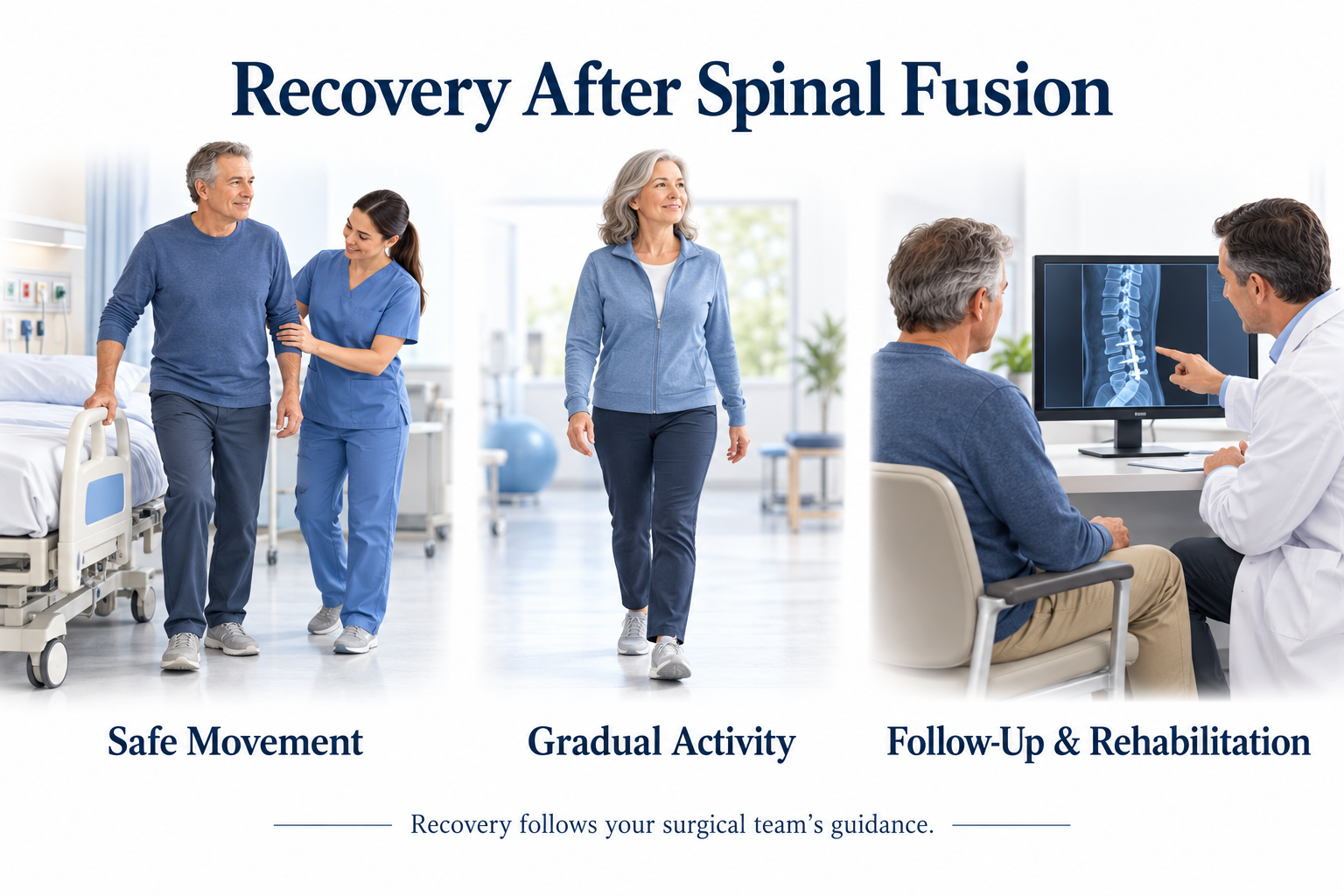
Spinal fusion recovery is gradual. Resuming daily activities and achieving a solid bone fusion are different milestones. Feeling better does not necessarily mean the operated segment is ready for unrestricted loading. [4,6]
MedlinePlus notes that bone healing after fusion takes at least several months and may continue for a year or longer. This is a broad description, not a personal recovery deadline. [6]
Early recovery
The initial focus is pain management, safe movement and wound care. The team explains how to get out of bed, sit, stand and walk. A brace may be prescribed in some cases. [4,6]
Increasing activity
Walking and daily activity generally progress according to the surgical plan. Follow the restrictions provided for bending, lifting and twisting. Avoid copying an exercise schedule intended for another patient or a different operation. [6]
Rehabilitation and follow-up
Physiotherapy may help restore strength and movement habits, but its timing is individualized. Follow-up assessments help the team review symptoms and healing before allowing more demanding activity. [3,4]
When Can You Return to Work or Sport?
There is no single return-to-work date. The demands of the job, the number of levels treated, general health and recovery all matter. Seated work and repeated heavy lifting require different planning. [3,6]
Sport and strenuous exercise need separate clearance. Driving should also be discussed with the treating team, including whether medication or restricted movement affects safe vehicle control. Obtain advice for your particular operation rather than relying on a general online timetable. [6]
What Are the Risks of Spinal Fusion?
Potential complications include infection, bleeding, blood clots, nerve or blood-vessel injury and persistent or recurrent symptoms. Bone may fail to unite adequately, known as nonunion or pseudarthrosis. Further treatment or surgery may be needed. [1,4]
Other concerns include spinal fluid leakage and later problems at adjacent levels. Fusion also reduces movement at the treated segment. The effect on overall flexibility depends on where and how extensively the spine is fused. [2,3]
These risks should be discussed in relation to the proposed operation and the patient’s health, rather than summarized as one universal success rate.
Warning Signs During Recovery
Contact the surgical team promptly for fever, increasing wound redness, drainage or worsening pain. New or worsening weakness, major sensory changes or difficulty controlling bladder or bowel function require urgent medical assessment. Chest pain or difficulty breathing requires emergency care. [3,6]
Follow the hospital’s specific instructions and emergency contact arrangements.
Frequently Asked Questions
Is spinal fusion a major operation?
Yes. Its complexity varies, but it requires careful preparation, discussion of risks and a structured recovery plan. [3]
Will spinal fusion remove all back pain?
No result can be guaranteed. Some symptoms may persist or return. Ask which symptoms the proposed surgery is intended to address. [1]
Will I lose all movement in my back?
No. Movement is eliminated at the fused levels, while other parts of the spine remain mobile. Larger fusions may have a greater effect on flexibility. [2,3]
Does smoking affect fusion healing?
Yes. Tobacco use can slow healing and increase the risk that the fusion does not unite. Discuss cessation support with your healthcare team. [4,6]
Is minimally invasive fusion right for everyone?
No. Smaller-incision techniques are options for selected procedures and patients. Suitability depends on the condition and surgical requirements; “minimally invasive” does not remove the need for bone healing. [7]
Spine Solutions at Davin Med
Spinal fusion is one area within the broader field of spine surgery. Davin Med’s spine portfolio brings together spinal implants and surgical instrumentation for professional healthcare buyers and medical device distributors.
Explore Davin Med Spine Systems for an overview of this business area. Professional buyers can contact the team for current product information, documentation and supply enquiries. Treatment decisions and implant selection remain the responsibility of qualified healthcare professionals.
This article provides general education and does not replace individual medical advice. Follow the guidance of your surgeon and rehabilitation team for your specific condition and procedure.
References
- Mayo Clinic — Spinal Fusion
- MedlinePlus — Spinal Fusion
- Cleveland Clinic — Spinal Fusion
- AAOS OrthoInfo — Spinal Fusion
- AAOS OrthoInfo — PLIF and TLIF
- MedlinePlus — Spine Surgery: Discharge
- AANS — Minimally Invasive Spine Surgery
- AAOS OrthoInfo — Bone Grafts in Spine Surgery