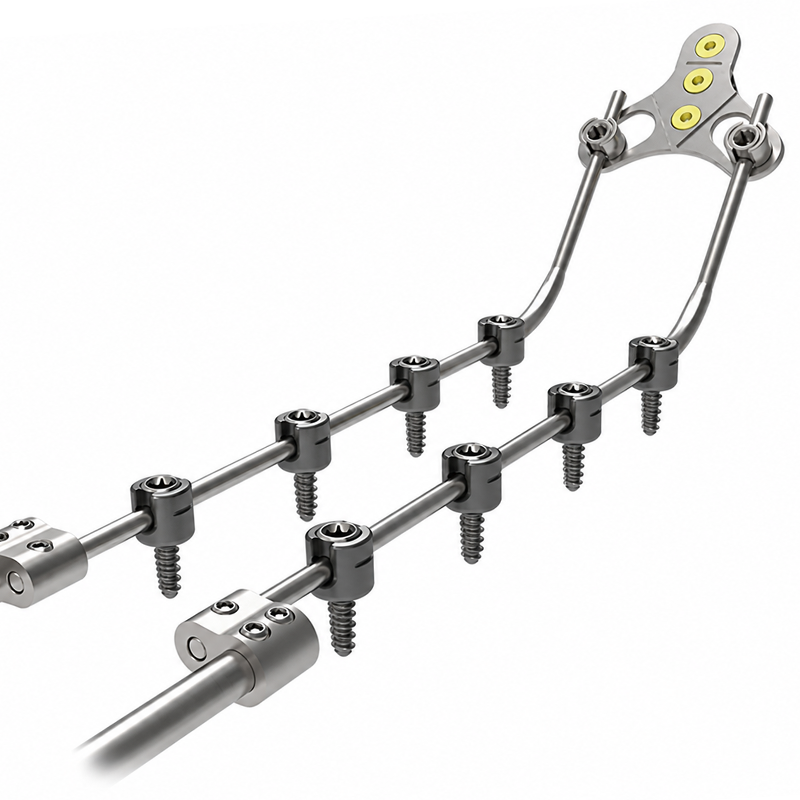
Pedicle screws help hold selected vertebrae in position during spine surgery. They are usually connected with rods to form a fixation system that limits movement and maintains alignment. In spinal fusion, this system provides support while bone grows between the vertebrae to create a solid connection.
Understanding the difference between the implants and the healing process helps explain why a spine can be stabilized during surgery but still need months to fuse.
What Is a Pedicle Screw?
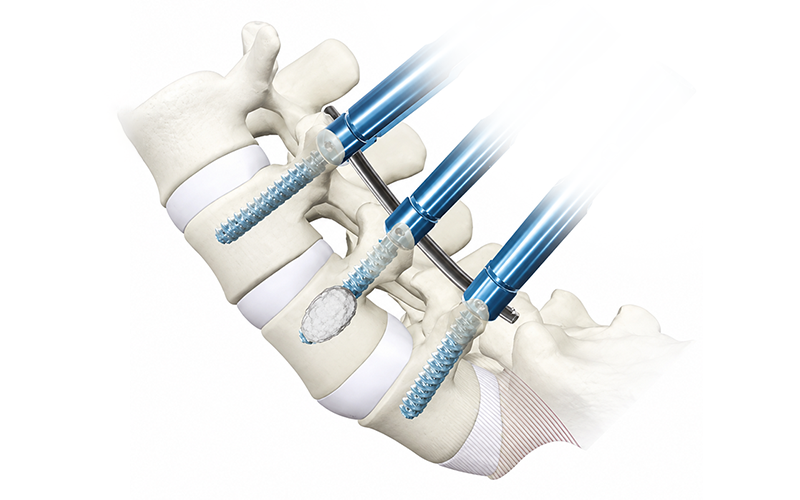
A pedicle screw is an orthopedic implant placed through a strong bridge of bone called the pedicle and into the vertebral body—the main weight-bearing part of a vertebra.
The screw head provides an attachment point for a connecting rod. When screws in neighboring vertebrae are joined by rods, they form a structure that helps control movement across the treated spinal segment.
Why Are Pedicle Screws Used?
Surgeons use pedicle screw systems when a spinal procedure requires stabilization or support for correcting alignment. Their role depends on the underlying condition and the planned operation.
Supporting Spinal Fusion
During spinal fusion surgery, bone graft material helps neighboring vertebrae grow together. Screws and rods hold the treated area steady while that process develops. The implants provide mechanical support; the fusion forms through bone healing.
Maintaining Alignment in Spinal Deformity
In selected deformity procedures, screws and rods help establish and maintain a planned spinal alignment. For example, instrumentation can be combined with fusion during treatment of scoliosis or traumatic kyphosis. The choice of fixation depends on the curve, anatomy, and surgical plan.
Stabilizing an Unstable Spinal Segment
Some patients have instability associated with spinal disease or injury. Stabilization may also be considered alongside decompression, a procedure that creates more room for compressed nerves. Not everyone having decompression needs screws or fusion; the surgeon assesses whether instability is present or expected.
Pedicle Screws, Rods, and Cages: What Is the Difference?
These components perform different jobs and may be combined in the same operation.
| Component |
Main function |
| Pedicle screws |
Provide attachment points within the vertebrae. |
| Connecting rods |
Link screw heads to stabilize the treated spinal segment. |
| Interbody cage |
Occupies the space between vertebral bodies after disc removal, providing structural support as part of an interbody fusion. |
| Bone graft |
Provides material that supports the development of a bony fusion. |
An interbody cage and a screw-and-rod system are therefore separate parts of a repair. In procedures such as TLIF or PLIF, the surgeon may use both to support the intended fusion.
Do Pedicle Screws Replace the Need for Bone Healing?
No. Screws and rods can stabilize the spine immediately, but a solid fusion takes time to develop. Feeling more comfortable does not necessarily mean that the vertebrae have fully fused.
Follow-up appointments help the surgical team assess recovery and decide when to increase activity. Restrictions on bending, lifting, and other movements depend on the procedure and the patient’s progress.
What Are the Risks?
Spinal fixation is part of a larger operation, so the discussion includes both implant-related concerns and general surgical risks. These can include infection, bleeding, nerve injury, problems involving the rods or screws, and failure of the bone to form a solid fusion.
The likelihood and consequences vary with the procedure and the patient’s health. Before surgery, ask what the fixation system is intended to achieve and which risks are most relevant to your case.
Frequently Asked Questions
Does every spinal fusion use pedicle screws?
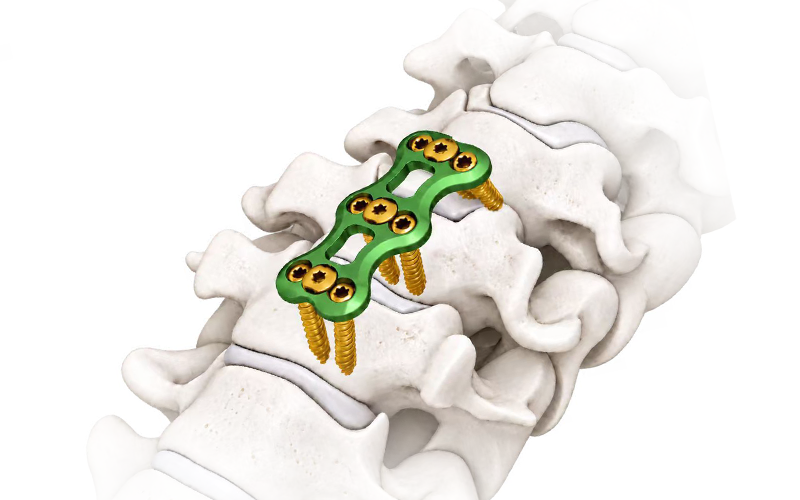
No. Spinal fusion can use different approaches and types of instrumentation. Pedicle screws and rods are one option; other procedures may use plates or different fixation arrangements.
Do pedicle screws directly relieve pressure on nerves?
Their main function is stabilization. Decompression addresses nerve pressure by creating space around the affected nerves. The two procedures may be performed together, but they have different purposes.
Are the screws and rods removed after fusion?
Removal is generally a separate decision rather than an automatic step. Hardware can remain in place after healing; a surgeon may consider removal in selected circumstances after assessing the fusion and the reason for another operation.
How long does recovery take?
Recovery depends on the condition treated, the number of spinal levels involved, and the operation performed. Bone fusion can take several months, even when symptoms improve sooner. Your surgical team should provide an individual plan for rehabilitation and return to work.
For orthopedic professionals and distributors exploring spinal fixation systems, the Davin Med Spine System category brings together spinal implants and instruments. Product selection should match the planned procedure and the specific system’s documentation.
This article provides general education and does not replace an assessment by a qualified spine specialist.