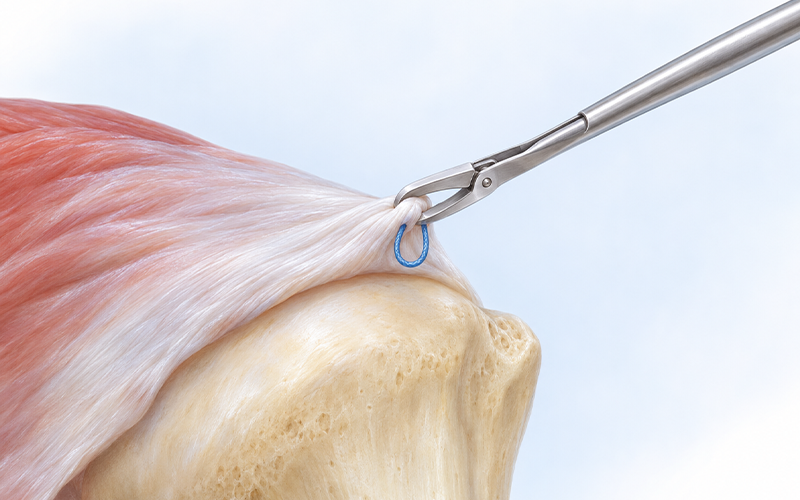
TPLO and TTA are two surgeries used to stabilize a dog’s knee after the cranial cruciate ligament (CCL) becomes damaged. TPLO changes the slope at the top of the shinbone. TTA moves the bony attachment of the kneecap tendon forward. Both change how forces act on the knee when the dog puts weight on the leg. Neither replaces the torn ligament.
Why does a torn CCL make a dog’s knee unstable?
The cranial cruciate ligament helps keep the shinbone (tibia) from sliding forward relative to the thighbone (femur). When the ligament no longer provides enough support, weight-bearing can push the tibia forward. This is called cranial tibial thrust. The resulting instability can contribute to pain, limping, and injury to the meniscus, a cushion inside the joint.
You may hear this called a “dog ACL tear.” The canine ligament is properly called the CCL, and the knee joint is also called the stifle.
How does TPLO surgery work?
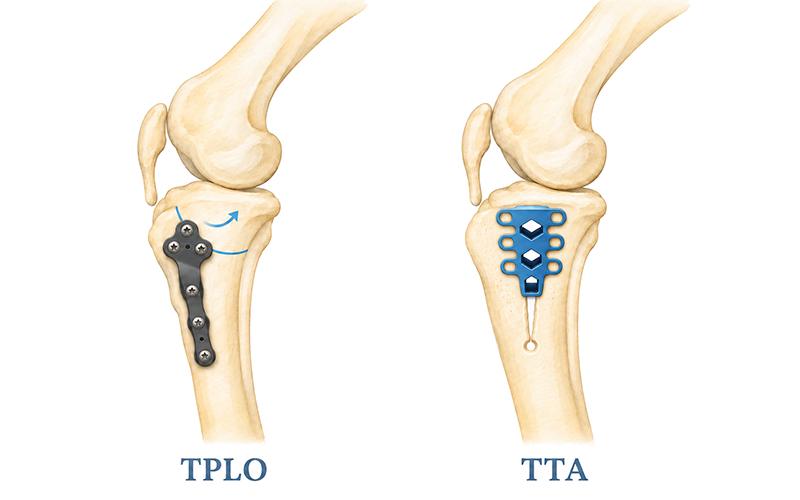
Tibial plateau leveling osteotomy (TPLO) changes the angle of the tibial plateau, the surface at the top of the shinbone. The surgeon rotates a section of bone to reduce its slope, then holds it in its new position with a plate and screws while the bone heals. Changing the slope helps counter the forward push on the tibia during weight-bearing.
How does TTA surgery work?
Tibial tuberosity advancement (TTA) moves the tibial tuberosity, the ridge at the front of the shinbone where the kneecap tendon attaches. Moving this ridge forward changes the tendon’s angle and how its force acts across the knee. An implant maintains the advancement while the bone heals. The exact implant arrangement varies with the TTA technique.
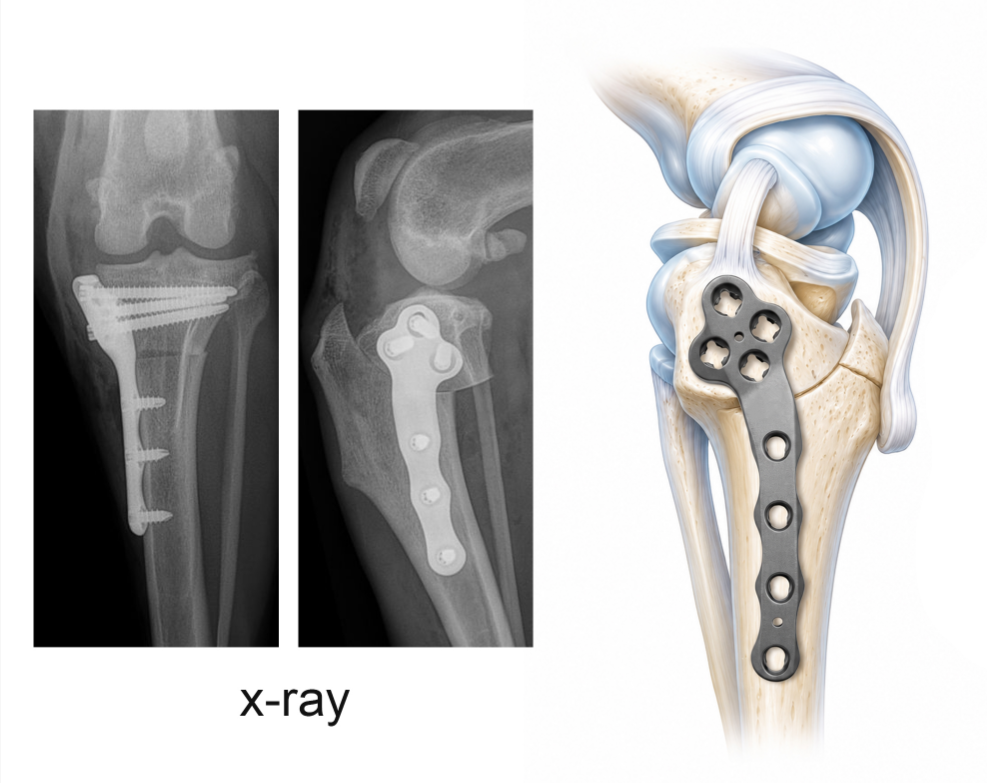
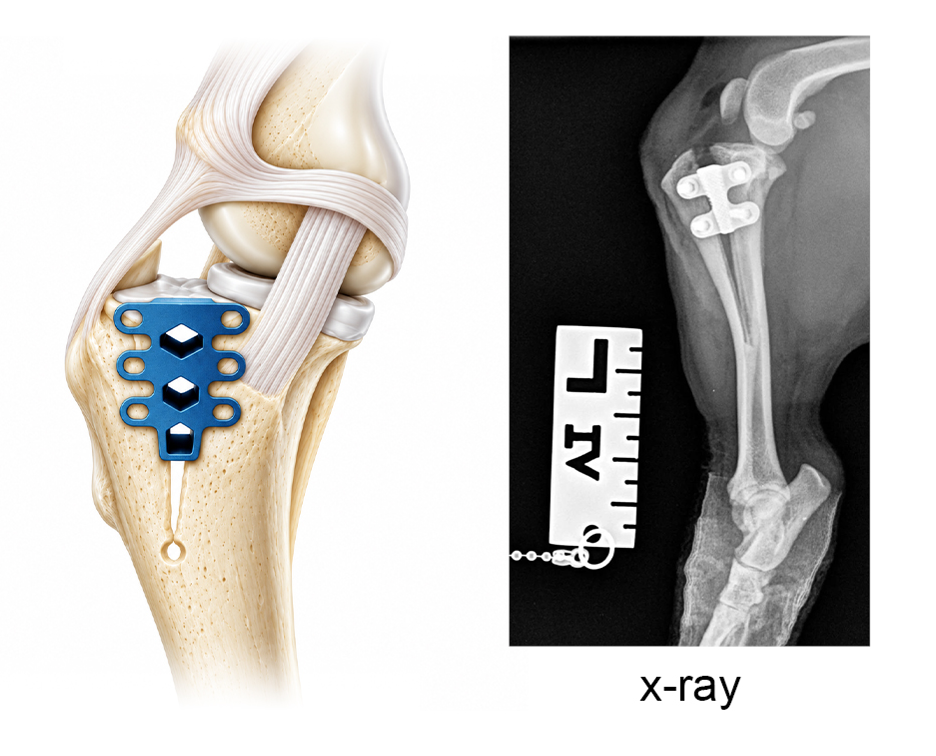
| What to compare |
TPLO |
TTA |
| What changes? |
The slope at the top of the tibia |
The position of the kneecap tendon’s attachment on the tibia |
| What holds the bone in position? |
A plate and screws |
A spacer or cage and fixation, depending on the technique |
| What is the goal? |
Reduce forward sliding of the tibia during weight-bearing |
Reduce forward sliding of the tibia during weight-bearing |
| What does recovery involve? |
Restricted activity and follow-up while the bone heals |
Restricted activity and follow-up while the bone heals |
Is TPLO or TTA better for my dog?
There is no single answer for every dog. The veterinarian considers the shape and angles of the knee on X-rays, the dog’s size and activity, other knee problems, and the overall health of the dog. The surgeon may also assess the meniscus and discuss whether damage to it needs treatment during surgery.
A useful question is: “What do my dog’s exam and X-rays show that makes you recommend this approach?” Ask what alternatives are reasonable, what complications to watch for, and when follow-up visits or X-rays are expected.
Is recovery different after TPLO and TTA?
Both operations involve cutting and repositioning bone, so both require time for bone healing. Your veterinarian will give you a plan for pain control, activity restriction, and follow-up. A dog may start walking more comfortably before the bone has healed enough for running, jumping, or off-leash play. Use the veterinary team’s instructions and follow-up findings to guide changes in activity.
Frequently asked questions
Does either operation replace the torn ligament?
No. Both change the mechanics of the knee to improve stability during weight-bearing.
Does either surgery cure arthritis?
No. The aim is to improve stability and function. Osteoarthritis can still progress, and your veterinarian can help plan ongoing joint care.
Will my dog need another X-ray?
Follow-up X-rays are commonly used to assess bone healing before activity increases. Ask the surgeon when they expect to recheck your dog.
For veterinary teams and distributors, explore Davin Med’s veterinary orthopedic product category for TPLO and TTA implants and instruments.
This guide is for general education. A veterinarian can assess which treatment options are suitable for your dog.
Clinical reference: American College of Veterinary Surgeons — Cranial Cruciate Ligament Disease