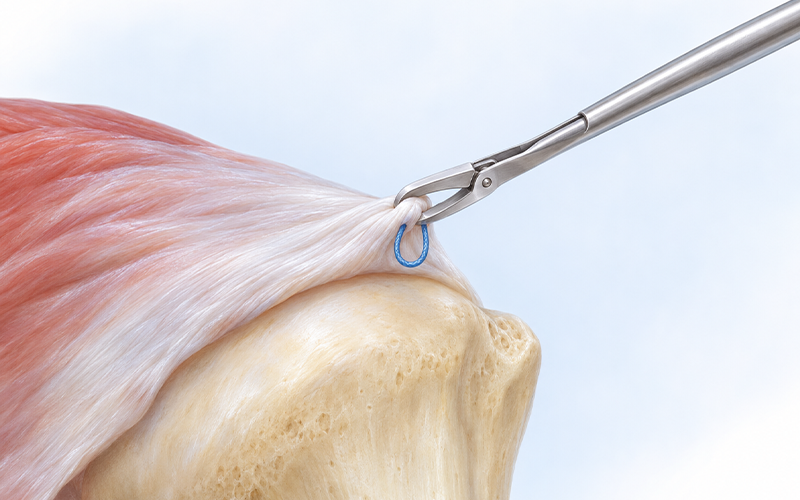
A suture passer is a surgical instrument that helps the surgeon get a stitch through soft tissue during shoulder arthroscopy. In rotator cuff repair, for example, it helps pass sutures through the torn tendon. Those sutures can then hold the tendon against the bone so it can heal. The passer is removed during the operation. The sutures, and any anchors used to secure them, are the parts that remain.
Why is a suture passer useful in shoulder arthroscopy?
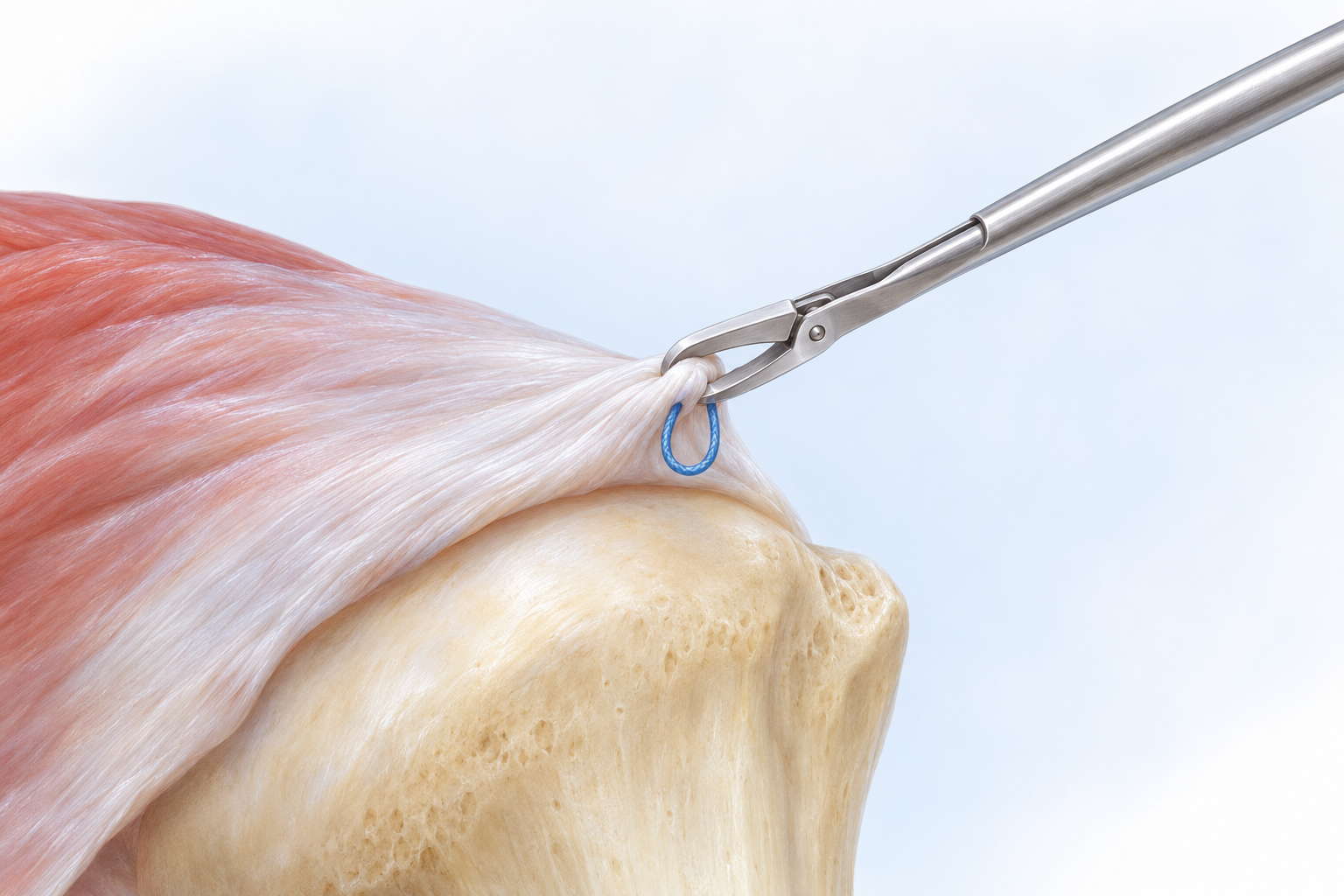
In arthroscopic surgery, the surgeon looks inside the shoulder with a small camera and works through small openings called portals. The challenge is getting a stitch through the intended part of the tissue from a limited working angle. A suture passer lets the surgeon control where the stitch goes while watching its position on the screen.
Some passers carry the repair suture directly through the tissue. Others pass a separate loop or strand first, which then pulls the repair suture through. This second approach is called shuttling. Both approaches accomplish the same task, but the instruments handle the suture differently.
What does a suture passer do during rotator cuff repair?
A torn rotator cuff tendon can pull away from its attachment on the upper arm bone. During repair, the surgeon uses sutures to hold the tendon at that attachment site. The passer helps place the stitches through the tendon; when the repair uses suture anchors, the anchors secure the sutures to bone.
The order can vary with the repair technique. For example, one published arthroscopic technique passes sutures through the tendon before securing them with anchors. That illustrates why passing a stitch through tissue and securing the stitch to bone are two separate jobs.
Suture passer vs. suture anchor vs. suture grasper
| Instrument or implant |
Main job |
Does it stay in the shoulder? |
| Suture passer |
Carries a stitch or a shuttle through soft tissue. |
No. |
| Suture anchor |
Provides a fixation point in bone for the repair sutures. |
It is implanted as part of the repair. |
| Suture grasper |
Picks up and retrieves a strand that is already accessible. |
No. |
These names describe the tools’ main jobs. Some suture passer designs can also retrieve the strand they pass, so the functions can overlap.
Are all shoulder suture passers the same?
No. Passers differ in tip shape, how they carry the suture, and the angle at which they can reach the tissue. A design that works well when the tendon is easy to reach may be less convenient when the intended stitch location is approached at an angle. For surgical teams comparing instruments, three practical questions are whether the tip can reach the intended site, whether the device is designed for direct passage or shuttling, and which sutures it supports.
Frequently asked questions
Does a suture passer repair the tendon by itself?
No. It helps place the stitches. The repair depends on how those stitches hold the tendon in position and how the tissue heals afterward.
Is a suture passer left inside the shoulder?
No. It is a surgical instrument used during the operation. The repair sutures and any anchors are separate components.
Is a suture passer the same as a needle used to close the skin?
No. A suture passer places stitches through tissue inside the shoulder as part of the repair. Closing the small skin incisions is a separate step.
For orthopedic teams and distributors comparing instruments for soft tissue repair, explore the Davin Med arthroscopy and sports medicine product category.
Clinical reference: Arthroscopy Techniques — Suture passage through the rotator cuff tendon during arthroscopic repair