Plates and screws hold the broken ends of the clavicle, or collarbone, in position while the bone heals. This operation is called open reduction and internal fixation (ORIF). Many collarbone fractures heal without surgery. Whether a plate is useful depends on where the bone broke, how far the fragments moved, and what the patient stands to gain from surgery.
When does a broken collarbone need surgery?
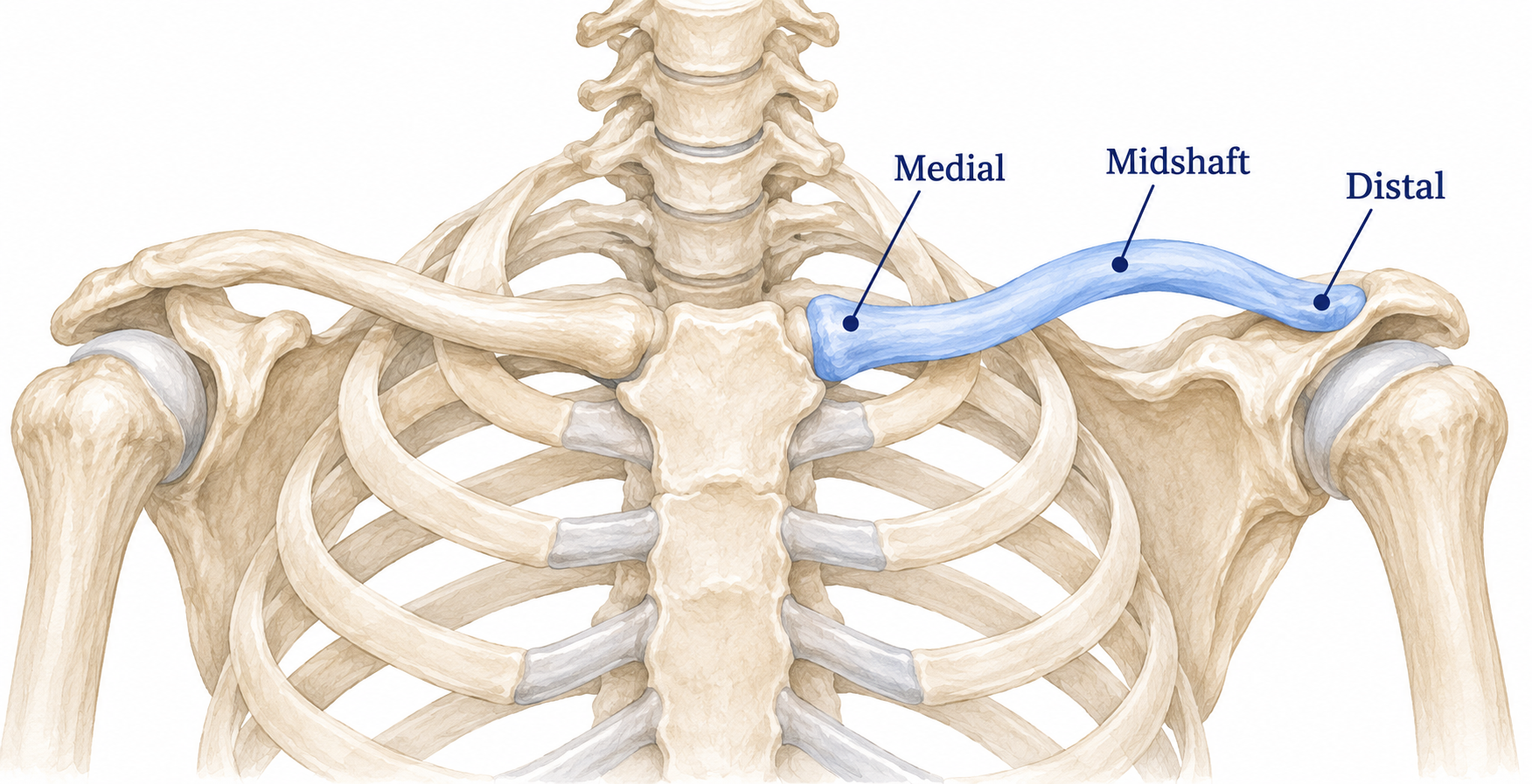
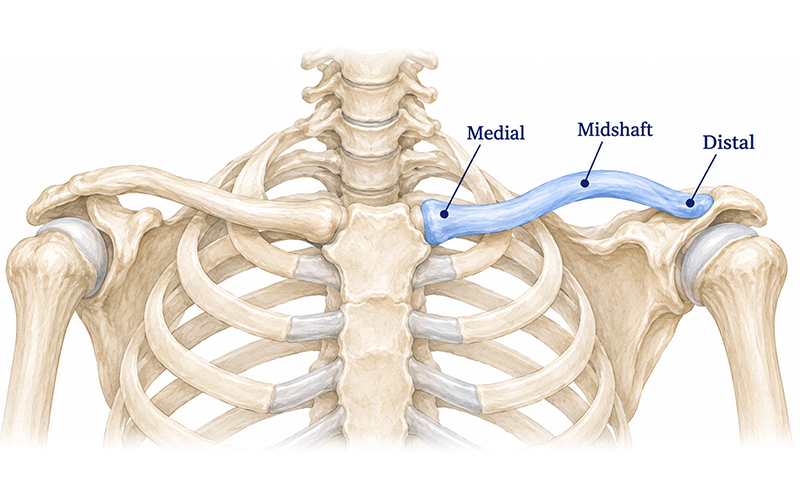
The clavicle runs from the breastbone to the shoulder. A fracture can occur in the middle of the bone, near the shoulder, or near the breastbone. The location matters because it affects how stable the break is and which treatment options are suitable.
A fracture whose pieces remain reasonably aligned can often be treated with a sling and a gradual return to movement. Surgery may be discussed when the pieces are substantially out of position or when an unstable fracture near the shoulder is unlikely to stay aligned. A wound over the fracture or skin stretched tightly over a sharp bone fragment changes the urgency of assessment. The orthopedic team uses the exam and X-rays together to make the decision.
For adults with an isolated displaced midshaft clavicle fracture, the American Academy of Orthopaedic Surgeons (AAOS) reports that surgery is associated with a higher chance of the bone joining and better early patient-reported outcomes. Both surgical and nonsurgical care can produce similar long-term patient-reported outcomes and satisfaction. These findings apply to that particular adult fracture pattern and should not be generalized to children or to every collarbone fracture. [1]
How do plates and screws stabilize the collarbone?
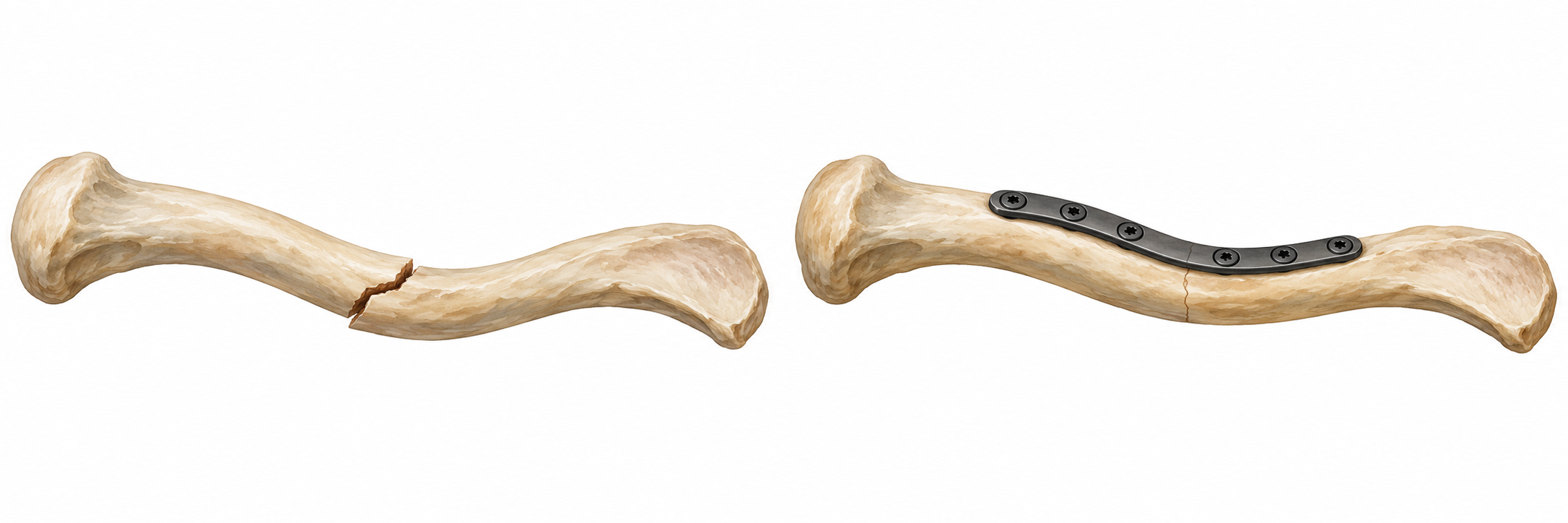
During ORIF, the surgeon repositions the bone fragments, places a plate along the outside of the clavicle, and uses screws to secure it. The plate spans the break and helps limit movement between the fragments. The implant maintains alignment while the body forms and remodels new bone. [2]
A fracture in the middle of the collarbone presents a different challenge from a break near the shoulder, where the outer fragment may be too small to hold screws easily. Some fractures near the shoulder can be treated with a lateral locking plate; a hook plate is another design used in selected cases. The AAOS guideline notes that lateral locking plates may offer better function and fewer complications than hook plates for adults with a specific unstable distal fracture pattern called Neer type II. Implant selection depends on the fracture and the available bone for fixation. [1]
What is recovery like after clavicle fracture surgery?
Recovery usually progresses from protecting the shoulder to restoring movement, then building strength. A sling may be used early. The treating team determines when to start shoulder exercises and when to add lifting or resistance. Follow-up visits and X-rays help show whether the fracture is healing as expected. [2]
Pain can improve before the bone is ready for heavy loading. Returning to manual work, overhead lifting, or contact sports depends on healing, shoulder function, and clearance from the treating team. Ask for separate guidance for each activity, since the demands on the shoulder differ.
Do clavicle plates and screws need to be removed?
Clavicle plates and screws are usually left in place if they cause no problems. The collarbone sits just under the skin, so a plate can sometimes be felt or irritated by a backpack strap or seat belt. If irritation persists, the surgeon can check whether it is coming from the implant, confirm whether the fracture has healed, and discuss the benefits and risks of another operation. If a hook plate is proposed, ask before surgery whether the follow-up plan includes removal. [2]
Other potential complications include infection, numbness around the incision, and nonunion, meaning the bone does not join as expected. The possibility of these complications, together with the expected benefits, is part of the decision about whether to operate. [1, 2]
Frequently asked questions
Can a displaced collarbone fracture heal without surgery?
Yes. Some displaced fractures heal with nonsurgical care. In adults with an isolated displaced fracture in the middle of the clavicle, surgery increases the likelihood of healing, but long-term patient-reported outcomes can be similar with either approach. [1]
Can you feel a clavicle plate under the skin?
Some people can. A plate may feel more noticeable under a strap or where there is little soft tissue over the collarbone. If it hurts or interferes with daily activity, bring it up at a follow-up visit. [2]
When can you return to sports after clavicle fixation?
There is no single return date. The treating team considers evidence of bone healing, shoulder motion and strength, and the risk of impact or falling in the sport. [2]
For orthopedic professionals and distributors, the Davin Med locking plate category includes orthopedic plates and screws. The choice of implant for an individual fracture belongs to the treating surgical team.
This article provides general education and does not replace an orthopedic assessment.
References
- American Academy of Orthopaedic Surgeons — Treatment of Clavicle Fractures: Clinical Practice Guideline
- AAOS OrthoInfo — Clavicle Fracture (Broken Collarbone)