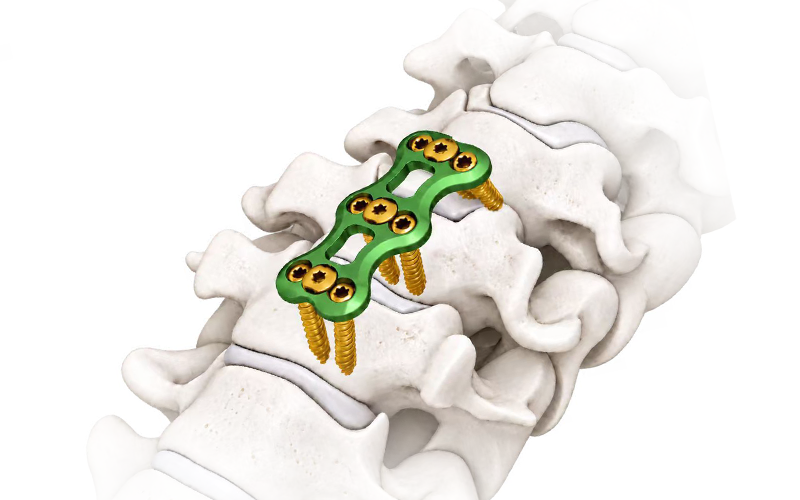
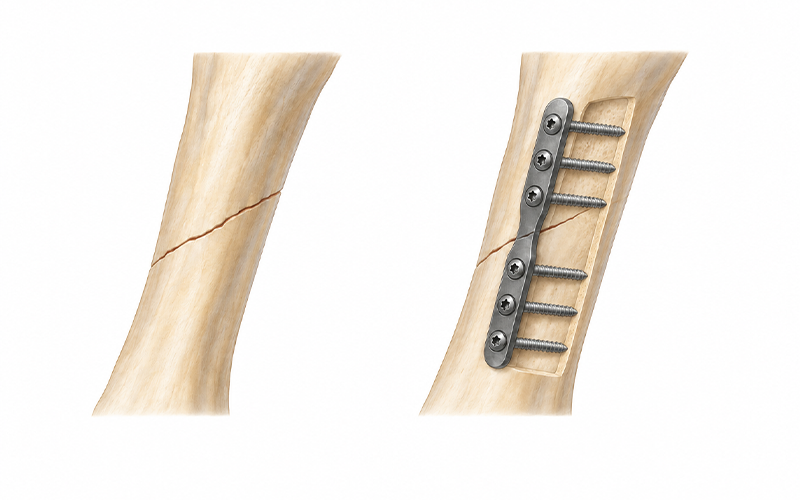
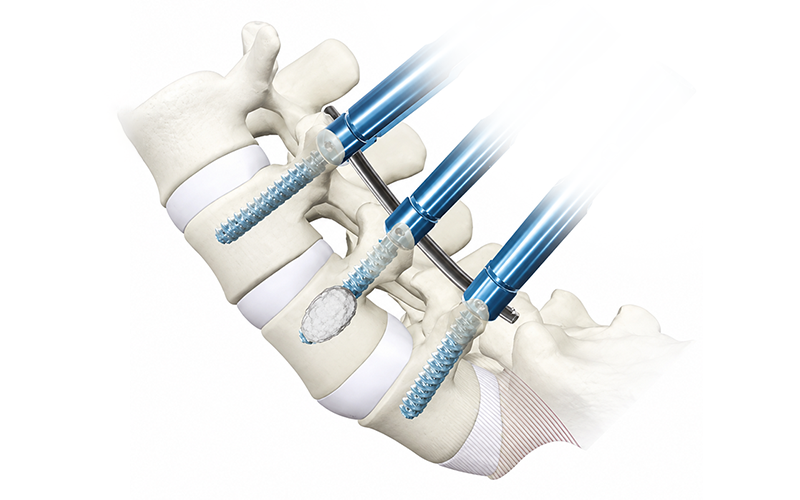
Plates and screws help broken bones heal by keeping the fragments in an appropriate position while the body repairs the injury. A bone plate acts as an internal support, and screws secure it to the bone. Together, they form a fracture fixation construct. They provide stability; they do not replace the body’s healing process. [1,2]
This guide explains plate and screw fixation in human orthopedic care, including why it may be recommended and what it means for recovery.
Why Does a Broken Bone Need Stability?
Bone healing depends on a suitable mechanical environment, blood supply and adequate nutrition. A fracture may need a cast, a brace or surgical fixation to prevent the fragments from moving out of position. [2]
The goal is not simply to make the X-ray look straight. Treatment must also create conditions in which the bone and surrounding tissues can recover. Even strong implants cannot guarantee healing if infection, poor blood supply or other problems interfere. [2]
What Does the Bone Plate Do?
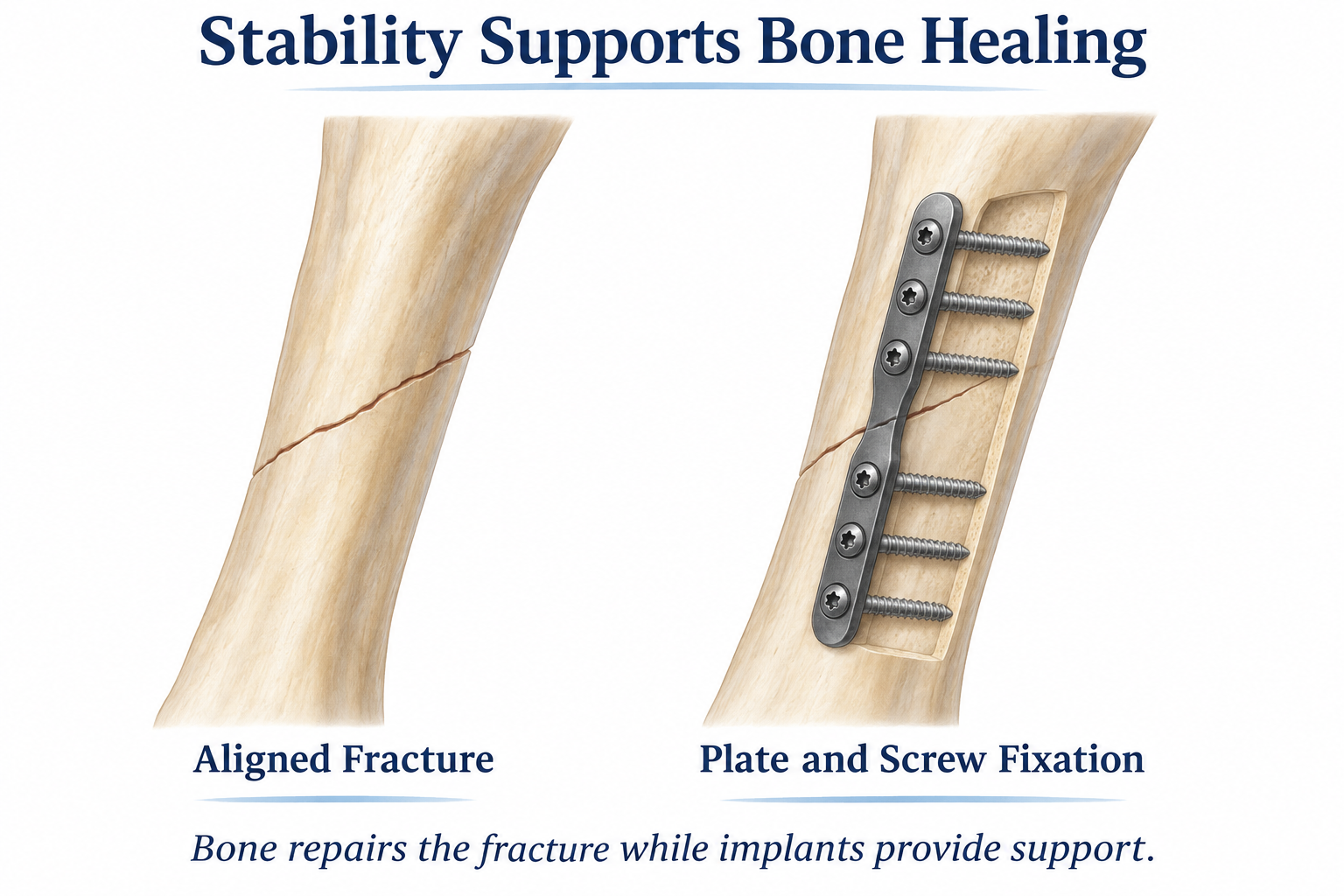
A plate sits along the outside surface of the bone, beneath the skin and soft tissues. Screws attach it to selected fragments. Plates come in different shapes and sizes for different anatomical locations and fracture patterns. [1,3]
A plate can serve different purposes. Some constructs compress a suitable fracture; others support fragments or bridge a region containing several pieces. The surgeon selects the fixation principle according to the injury. Not every plate is intended to squeeze every fragment together. [3]
What Do the Screws Do?
Screws may attach the plate to bone or hold selected fragments together. Their role depends on their design and placement. A screw used to compress a fracture serves a different purpose from one that locks into a plate. [1,3]
The number and arrangement are planned for the whole construct. More screws do not automatically mean a better repair; the fracture pattern, plate function and bone quality matter. [3]
Locking vs. Non-Locking Plates
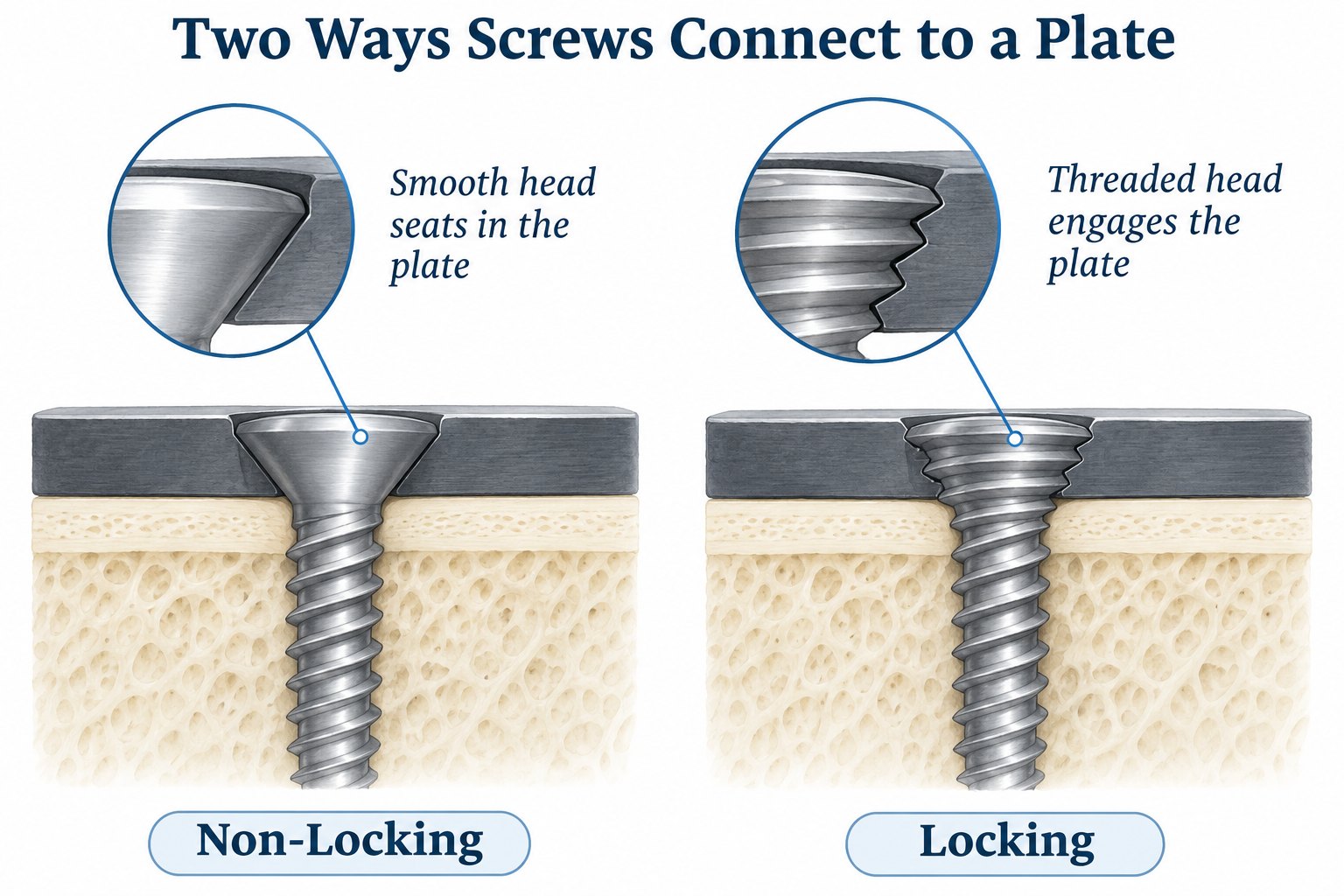
With conventional fixation, tightening a screw can draw the plate against the bone. A locking screw instead engages the plate through its head, creating a fixed relationship between the screw and plate. Some systems allow both types of screw. [3]
“Locking” describes the screw–plate connection. It does not mean that the bone is already healed or that unrestricted use is safe. The choice depends on the injury and fixation plan.
What Is ORIF?
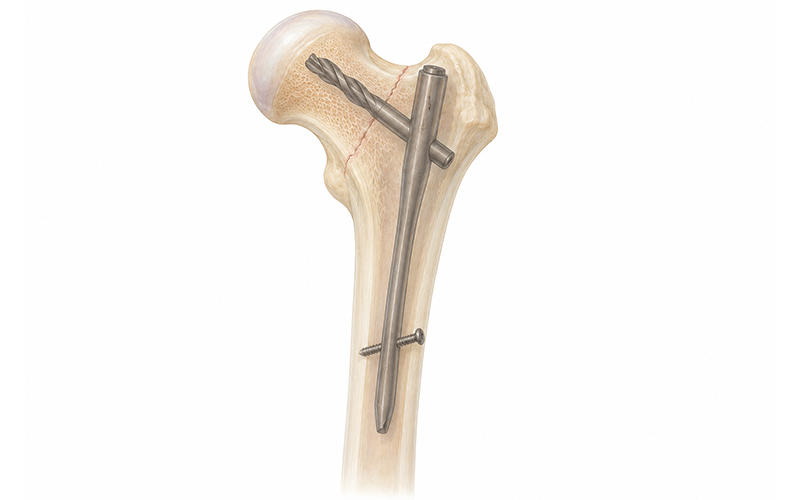
ORIF stands for open reduction and internal fixation. Reduction means restoring the position of the bone fragments. Internal fixation means holding them with implants inside the body. Plates and screws are one option; nails and other devices may also be used. [4]
The surgical approach varies. Some plates can be inserted using smaller incisions, while other fractures need greater exposure to restore alignment or the joint surface. [3]
Does Every Fracture Need a Plate?
No. Many fractures can be treated without surgery. Others may be better suited to an intramedullary nail, pins or an external frame. The location, stability and soft-tissue condition help determine the treatment. [1,4]
For open fractures, wound contamination and tissue damage also need attention. Definitive internal fixation may take place during the initial operation or later, depending on the injury. A temporary external fixator may be used while the wound is managed. [5]
How Is a Plate Different From an Intramedullary Nail?
| Implant |
General position |
Main role |
| Plate and screws |
Along the bone’s outer surface |
Support selected fragments or bridge the fracture |
| Intramedullary nail |
Within the bone’s central canal |
Stabilize suitable fractures from inside |
Neither is universally superior. They are different ways of providing stability for particular injuries. [1]
How Long Does Healing Take After Plate Surgery?
There is no single “bone plate recovery time.” Healing depends on the bone, injury severity, age, health and treatment. Some fractures heal in weeks; others require several months or longer. [4]
Pain may settle before the bone can tolerate normal loading. Follow-up examinations and imaging help the surgeon decide when activity can increase. Less pain is therefore not permission to lift, run or walk without prescribed support. [4]
Can You Move or Bear Weight After Surgery?
Movement and loading are separate decisions. A patient may be allowed gentle joint exercises while still avoiding lifting or weight-bearing through the injured limb. Instructions depend on the fracture and stability of the repair. [6]
For example, rehabilitation after forearm fixation may begin with guided movement to reduce stiffness, while heavier activity remains restricted. That plan cannot automatically be applied to a leg fracture or a different operation. [6]
Before discharge, ask for clear instructions about walking aids, slings or braces, permitted movement and follow-up appointments.
What Can Support Recovery?
Follow the activity and wound-care plan, attend reviews and discuss any difficulty managing daily tasks. Rehabilitation may help restore motion and strength at the appropriate stage. [4,6]
Smoking can impair blood supply and bone-forming activity, increasing the risk of delayed healing and wound complications. Discuss cessation support with the healthcare team. Adequate nutrition also matters, but supplements should address individual needs rather than be assumed to speed every fracture’s healing. [2,7]
What Are the Risks?
Possible complications include infection, delayed healing or nonunion, stiffness and fixation failure. Plates or screws can shift or break, and additional surgery may be needed. Surgery does not guarantee that a fracture will unite. [6]
Seek prompt advice for increasing wound redness, drainage, fever or worsening pain. New numbness, weakness or cold or discolored fingers or toes needs urgent assessment. Follow the hospital’s discharge instructions. [8,9]
Do Plates and Screws Need to Be Removed?
Often they can remain after healing. Removal may be considered in selected cases, but it is another operation with its own risks. There is no universal removal date. [1,6]
Ask why removal is being proposed, whether the bone has fully healed and what restrictions would follow. The fact that an implant is metal does not, by itself, mean it must be taken out.
Frequently Asked Questions
Do plates make bones heal instantly?
No. They support the fracture while new bone develops. [1,2]
Is titanium always better than stainless steel?
Both are used in orthopedic fixation. Material alone does not determine the suitability of a complete construct. [1]
Will I still need a cast or brace?
Sometimes. Additional support depends on the specific fracture and repair. [6]
Can a plate break?
Yes. Implant failure is possible, particularly if the fracture does not heal or the construct is overloaded. Report new pain or deterioration rather than testing the limb yourself. [6]
Fracture Fixation Solutions at Davin Med
Davin Med’s trauma portfolio includes orthopedic plates, screws and supporting surgical instruments for professional healthcare buyers and distributors.
Explore Davin Med Locking Plate Systems for an overview. Professional buyers can request current product specifications, intended-use information and compatible instrumentation. Clinical treatment and implant selection remain the responsibility of qualified healthcare professionals.
This article provides general education and does not replace individual medical advice. Follow your surgeon’s instructions for your fracture and fixation.
References
- AAOS — Internal Fixation for Fractures
- AAOS — Nonunions and Bone Healing
- AO Surgery Reference — Basic Principles of Plating
- AAOS — Fractures: Broken Bones
- AAOS — Open Fractures
- AAOS — Adult Forearm Fractures
- AAOS — Smoking and Musculoskeletal Health
- AAOS — Infections After Fracture
- NHS — General Wound Care Passport