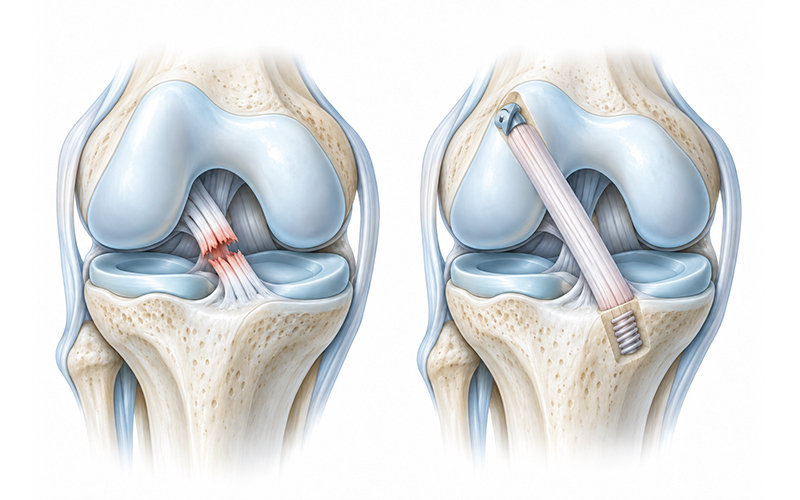
Meniscal repair is surgery that holds a torn meniscus together so the tissue has an opportunity to heal. Its purpose is to preserve this important structure within the knee. It differs from partial meniscectomy, which removes an irreparable portion of damaged tissue rather than joining the tear. [1,3]
Understanding that distinction helps explain why two people having “meniscus surgery” may receive very different instructions about walking, exercise and returning to sport.
What Does the Meniscus Do?
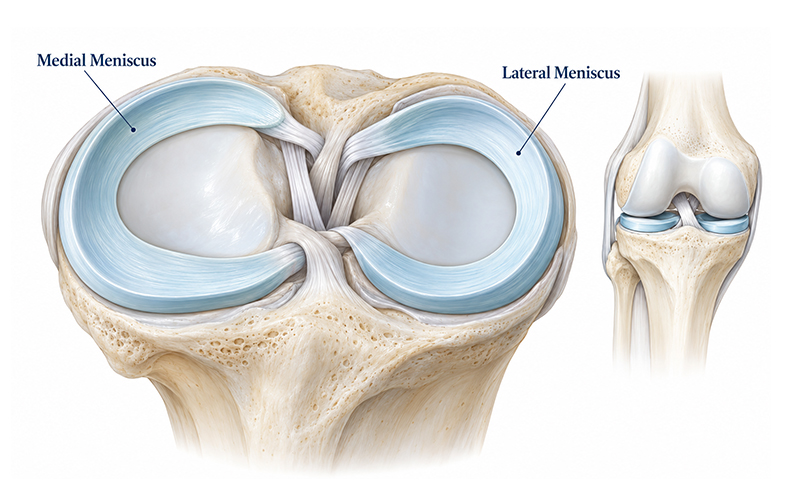
Each knee contains two menisci: the medial meniscus on the inner side and the lateral meniscus on the outer side. These curved fibrocartilage structures sit between the thighbone and shinbone, helping distribute load, absorb impact and support knee stability. [2]
A torn meniscus can follow a sudden twisting injury or develop as tissue changes over time. Sports injuries can also involve other structures, including the anterior cruciate ligament, or ACL. [2]
What Are the Symptoms of a Meniscus Tear?
Common symptoms include knee pain, swelling, stiffness, catching and difficulty fully bending or straightening the knee. Some people experience a feeling that the knee may give way. Being able to walk does not rule out a tear. [2]
These symptoms can have other causes. Assessment usually combines the injury history, a knee examination and, when appropriate, imaging. MRI can evaluate the meniscus and surrounding soft tissues; an X-ray may help identify arthritis or other explanations for pain. [2]
Does Every Torn Meniscus Need Surgery?
No. A meniscus tear does not automatically require an operation. Treatment depends on symptoms, the tear’s characteristics, the condition of the joint and the person’s goals. Rehabilitation and other nonsurgical measures may be appropriate. [2,4]
A displaced acute tear that restricts knee movement may warrant earlier surgical assessment. Persistent symptoms after nonsurgical care can also prompt a discussion about surgery. Neither an MRI finding nor occasional clicking, by itself, establishes that repair is needed. [4]
When Is Meniscal Repair Considered?
A surgeon evaluates whether the tissue can be repaired and has a reasonable chance of healing. Relevant considerations include the tear’s location and pattern, tissue quality, blood supply, existing cartilage wear and associated injuries. [1]
The outer region generally receives more blood than the inner region, which influences healing potential. However, the decision is more detailed than simply dividing tears into “repairable” and “not repairable” by location. The surgeon must assess the overall injury. [1]
For acute isolated tears with healing potential, AAOS guidance supports considering repair and preserving as much functional meniscal tissue as possible. That guideline does not cover every situation, including degenerative tears, root tears or injuries combined with ACL tears. [4]
Meniscus Repair vs. Partial Meniscectomy
| Question |
Meniscal repair |
Partial meniscectomy |
| What happens to the torn tissue? |
It is secured to allow healing. |
The damaged, irreparable portion is removed. |
| What is the main objective? |
Preserve meniscal tissue. |
Address symptomatic unstable tissue while retaining healthy tissue where possible. |
| Why does recovery differ? |
The repaired tissue needs protection while healing. |
There is no repaired tear that must unite. |
| Is either option suitable for every tear? |
No. |
No. |
Repair generally involves a longer rehabilitation process. A shorter initial recovery after trimming is only one consideration; preserving meniscal function also matters when selecting treatment. [1,3,4]
How Is Arthroscopic Meniscus Repair Performed?
Meniscal repair is commonly performed using knee arthroscopy. A small camera allows the surgeon to view the joint through small incisions. Sutures and repair devices are used to stabilize the torn tissue. [3,5]
The terms all-inside, inside-out and outside-in meniscus repair describe different ways of placing the repair. The technique is selected for the injury and surgical circumstances; these names do not indicate that one method is universally best. Some repairs require additional incisions. [1,5]
The final plan may change after the surgeon directly examines the tissue. Before surgery, patients should ask what alternatives may be necessary if the tear cannot be repaired. [6]
How Long Does Meniscus Repair Recovery Take?
Recovery takes months, but there is no single timetable for every repair. Walking comfortably, returning to work and returning to competitive sport are separate milestones. [7,8]
The EU–US rehabilitation consensus recommends combining healing time with functional milestones. It suggests at least four months of rehabilitation for some repaired vertical tears; complex, radial, root or horizontal repairs may require six to nine months. These are broad recommendations rather than personal clearance dates. [7]
Rehabilitation and return to sport
Early instructions may include crutches, a brace and limits on bending or weight-bearing. Physiotherapy then develops movement, strength and knee control. Progression depends on both healing time and functional recovery; less pain alone does not establish readiness for sport. Combined ACL reconstruction may extend the timeline. [7]
Can You Walk or Work After Meniscal Repair?
Ask your care team for written instructions about walking aids and weight-bearing before leaving hospital.
Work arrangements also vary. A seated role and a job involving lifting, kneeling or climbing place different demands on the knee. Driving requires safe control of the vehicle and must be discussed in relation to the brace, medication, operated leg and local requirements. [8]
What Are the Risks?
Possible complications include infection, blood clots, stiffness, bleeding and nerve or blood-vessel injury. A repair may fail to heal or tear again, sometimes leading to further surgery. [1,3]
Seek prompt medical advice for fever, wound drainage or worsening pain and swelling. New calf pain or swelling needs urgent assessment; chest pain or difficulty breathing requires emergency help. Follow the hospital’s discharge instructions. [3,9]
Questions to Ask Before Surgery
- Is my tear suitable for repair, and why?
- What is the alternative if repair is not possible?
- Will another knee procedure affect my recovery?
- What are my weight-bearing and bending restrictions?
- Which milestones determine return to work and sport?
Sports Medicine at Davin Med
Meniscal repair belongs to the wider field of sports medicine. Davin Med’s sports medicine portfolio includes implants and surgical instrumentation for professional healthcare buyers and distributors.
To explore the broader range, visit Davin Med Sports Medicine and Arthroscopy Systems. Professional buyers can request current specifications, documentation and supply information. Clinical treatment and device selection remain the responsibility of the treating healthcare team.
Frequently Asked Questions
Are meniscal repair and meniscus repair the same?
Yes. Both terms describe surgical repair of a torn meniscus.
Is meniscal repair the same as ACL reconstruction?
No. They treat different structures, although the procedures may be performed together. [2,7]
Does meniscal repair guarantee a normal knee?
No. Healing and function depend on the injury, the joint’s condition and rehabilitation; further treatment may sometimes be needed. [1]
Is a faster recovery always a better result?
No. Treatment decisions also consider tissue preservation and longer-term knee function. [4]
This article provides general education and does not replace individual medical advice. Follow your surgeon’s and physiotherapist’s instructions for your specific injury and repair.
References
- AAOS OrthoInfo — Meniscus Repair
- AAOS OrthoInfo — Meniscus Tears
- Cleveland Clinic — Meniscus Surgery
- AAOS — Management of Acute Isolated Meniscal Pathology
- Royal United Hospitals Bath NHS — Meniscal Repair
- Washington University Orthopedics — Meniscus Repair
- EU–US Meniscus Rehabilitation 2024 Consensus, Part I, published 2025
- East Kent Hospitals NHS — Meniscal Repair: Aftercare Advice
- Royal Devon NHS — Preparing for Your Knee Arthroscopy