
Davin Med · Orthopedic Trauma
Proximal Humerus Locking Plates
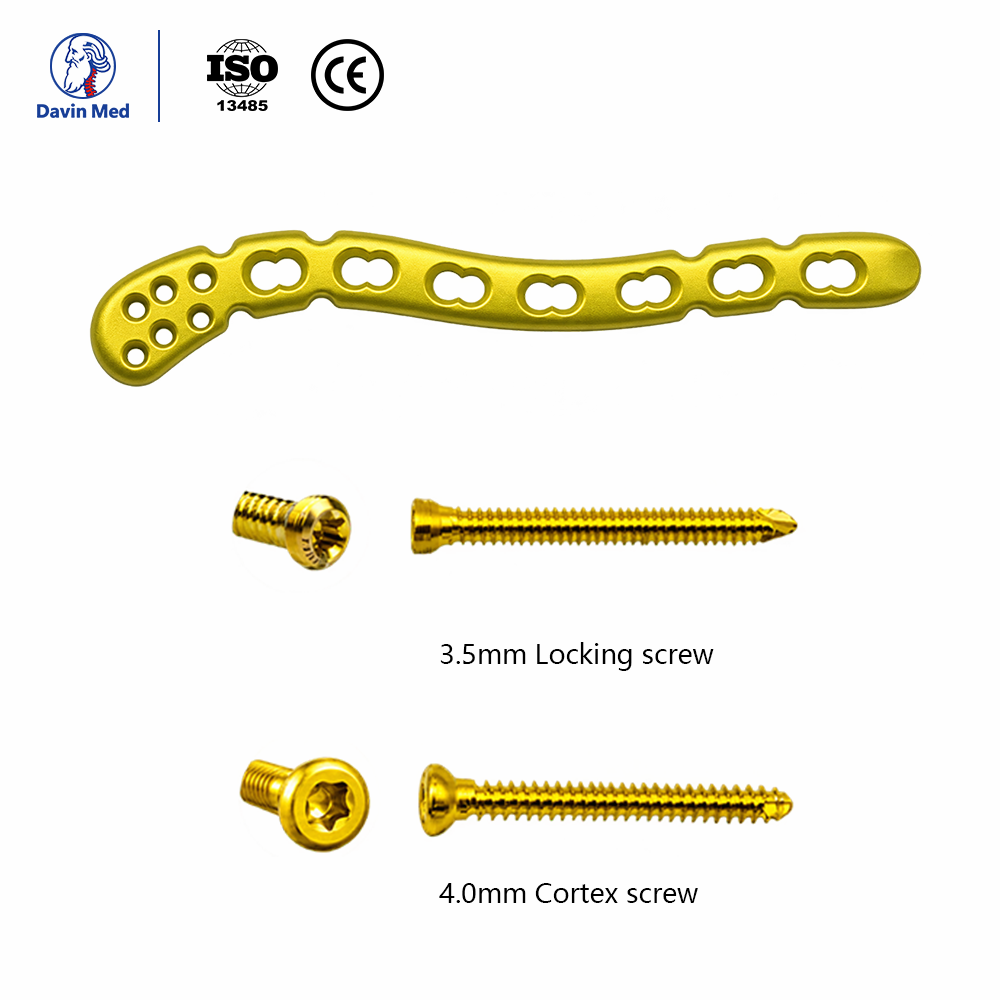
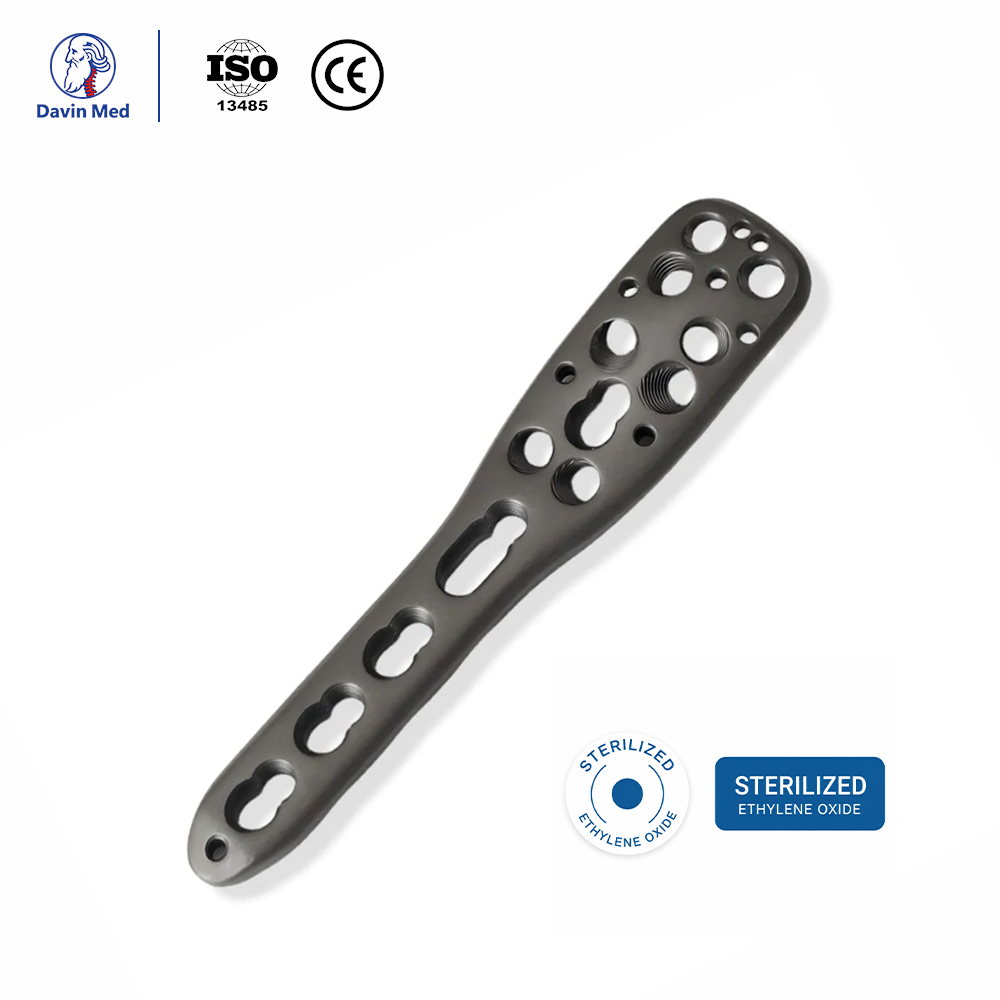
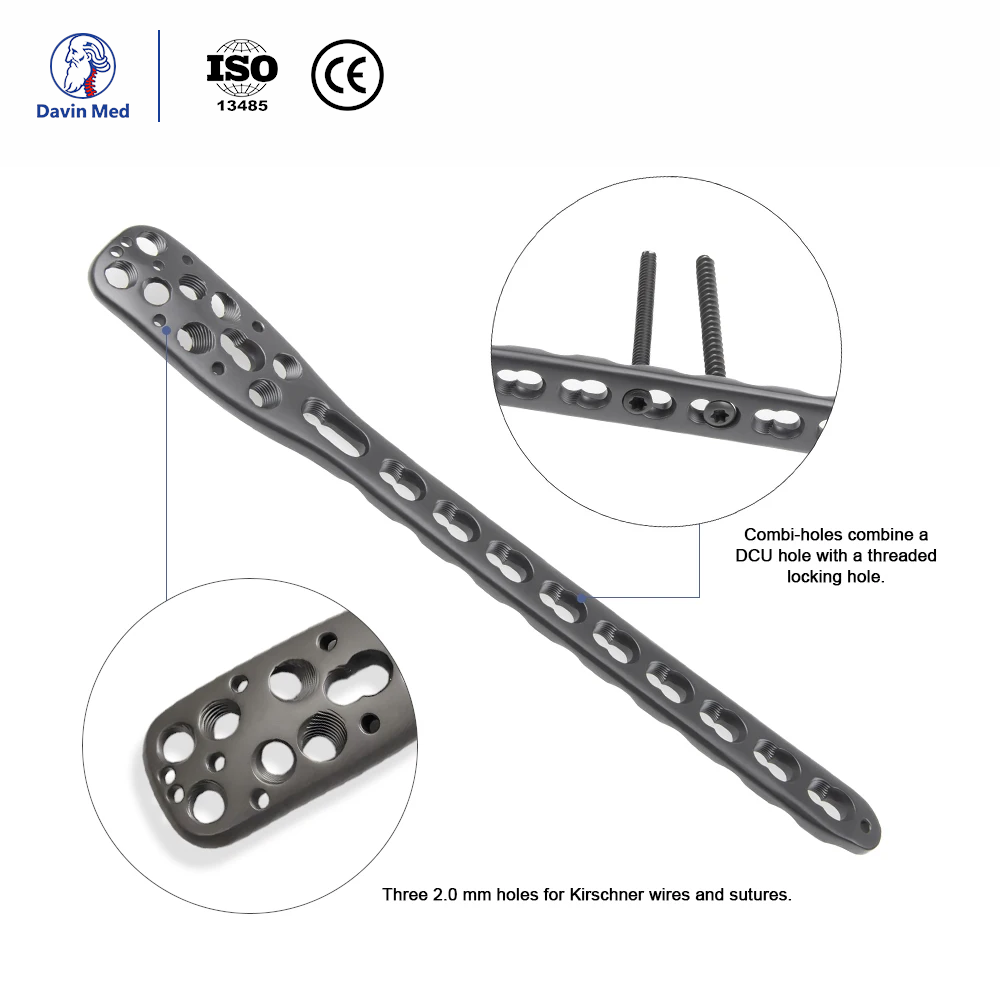
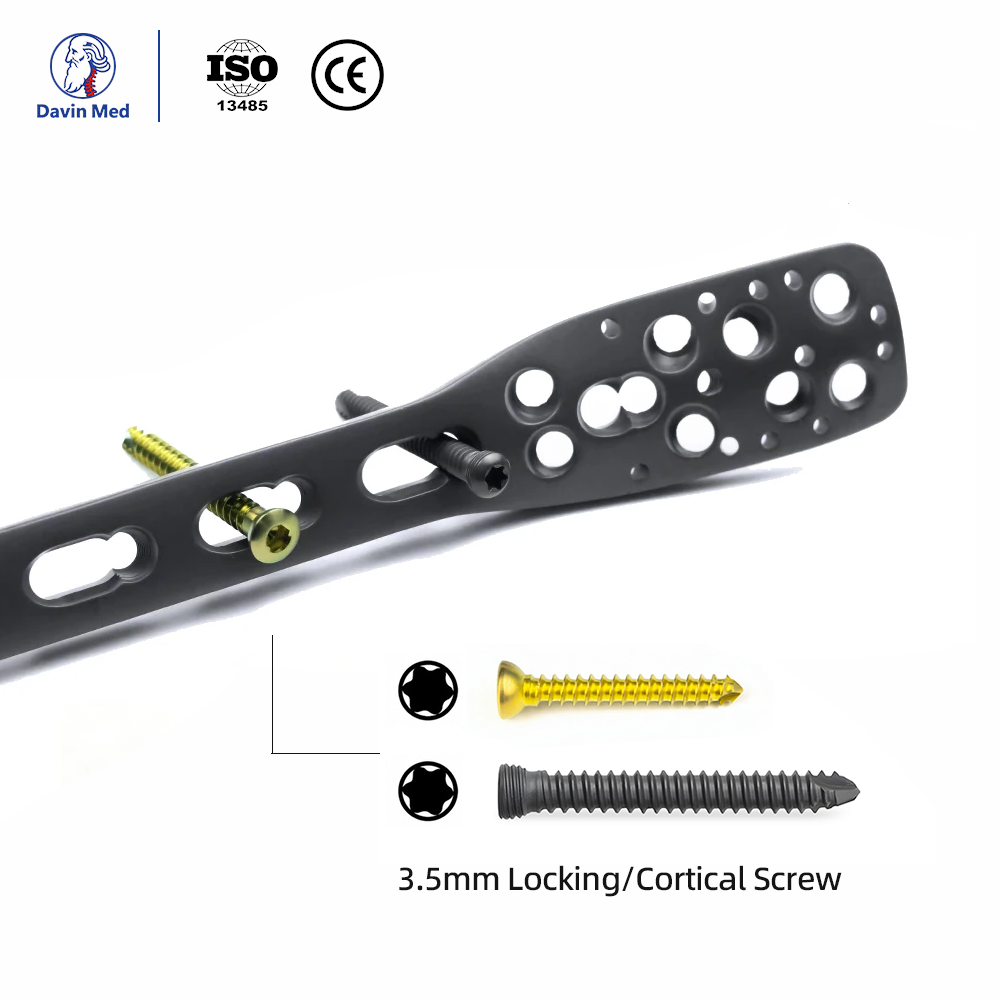
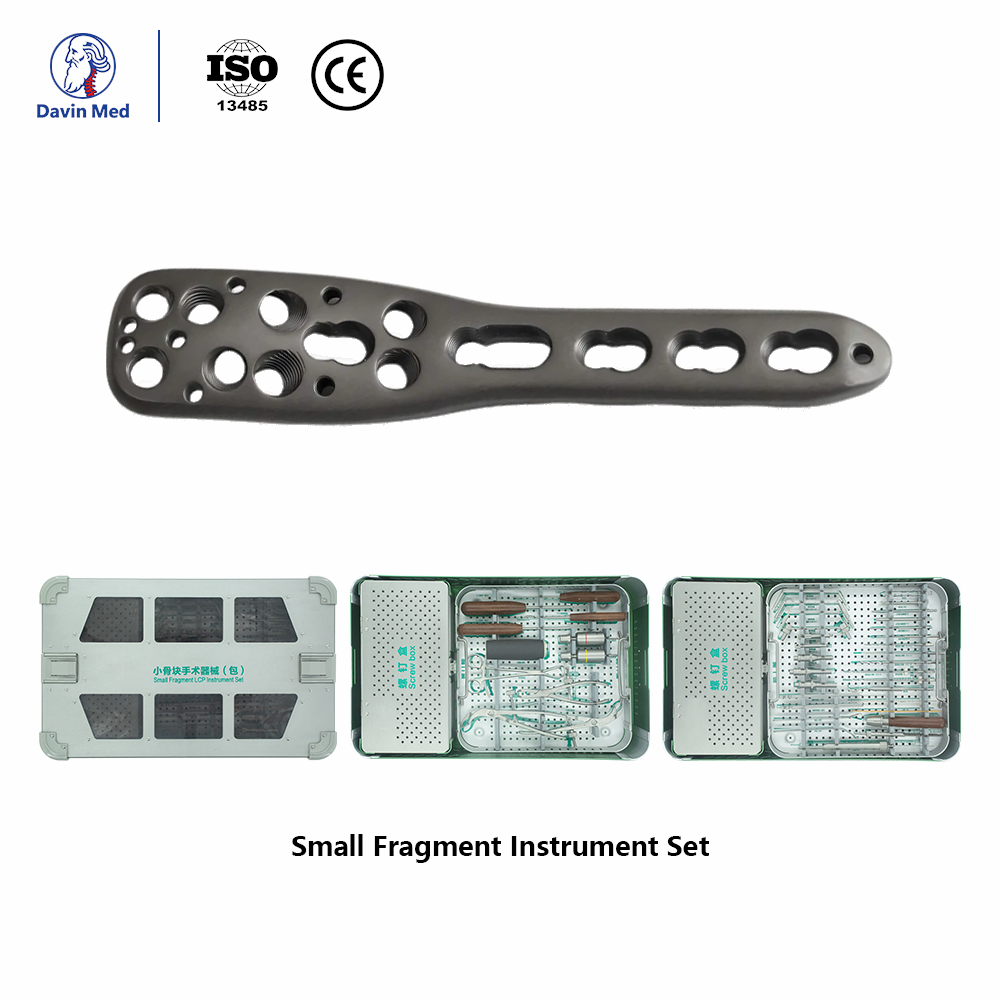
Davin Med Proximal Humerus Locking Plates (Type V, LPA61-B) are designed for internal fixation of proximal humeral and humeral shaft fractures. Made of pure titanium, they are compatible with 3.5 mm locking and cortical screws.
The LPA61-B series includes 11 plate sizes, from 3 to 13 holes and 94 to 224 mm in length.
For proximal humerus fracture fixation, select the appropriate plate according to the fracture pattern and approved product instructions.

Product Design
Six Key Advantages of Proximal Humerus Locking Plates
Davin Med proximal humerus plates combine pure titanium construction with locking fixation and multiple configurations.
Anatomical Configuration
Plate geometry is designed for the proximal humerus.
Locking Fixation
Locking screw holes provide angular stability.
Multiple Fixation Points
The plate head provides multiple screw fixation positions.
Pure Titanium
Pure titanium construction offers corrosion resistance and biocompatibility.
Multiple Lengths
Eleven plate lengths from 94 to 224 mm offer multiple fixation options.
Screw Compatibility
The LPA61-B series accepts 3.5 mm locking and cortical screws.

Implant Specifications
Proximal Humerus Locking Plates Design and Applications
The LPA61-B plate is designed for proximal humerus fracture fixation and humeral shaft fracture fixation.
- Material: Pure titanium.
- Model: Type V (LPA61-B).
- Hole options: 3–13 holes.
- Length: 94–224 mm, depending on model.
- Compatible screws: 3.5 mm locking and cortical screws.
Select the plate according to fracture anatomy and approved instructions.
Specification Note: Confirm model-specific indications, packaging and sterilization status before ordering.
Product Size & Coding
Proximal Humerus Locking Plates Complete Size Chart
The tables below list the LPA61-B model specifications and compatible screws.

| Product No. | Holes | Length (mm) |
|---|---|---|
| Z011-1022N030 | 3 | 94 |
| Z011-1022N040 | 4 | 107 |
| Z011-1022N050 | 5 | 120 |
| Z011-1022N060 | 6 | 133 |
| Z011-1022N070 | 7 | 146 |
| Z011-1022N080 | 8 | 159 |
| Z011-1022N090 | 9 | 172 |
| Z011-1022N100 | 10 | 185 |
| Z011-1022N110 | 11 | 198 |
| Z011-1022N120 | 12 | 211 |
| Z011-1022N130 | 13 | 224 |
| Parameter | Details |
|---|---|
| Material | Pure Titanium |
| Compatible Screws | 3.5 mm locking and cortical screws |
| Packaging / Sterilization | Confirm before ordering |
Product List Note: Select the correct model and confirm instrument compatibility before ordering.
Technical Specifications
Proximal Humerus Locking Plates Technical Specifications
The following summary presents the technical specifications of the LPA61-B locking plate series.
| Specification | LPA61-B | Ordering Consideration |
|---|---|---|
| Model | LPA61-B | Confirm model |
| Product Code | Z011-1022 series | Refer to model chart |
| Material | Pure Titanium | Confirm grade if required |
| Holes | 3–13 | Select hole count |
| Length | 94–224 mm | Refer to model chart |
| Locking Screws | 3.5 mm | Confirm quantity |
| Cortical Screws | 3.5 mm | Confirm quantity |
| Application | Proximal humeral and humeral shaft fractures | Confirm approved indications |
Type V Locking Plate
LPA61-B is the Type V proximal humerus locking plate.
Multiple Plate Lengths
The series is available in 3–13 hole specifications.
3.5 mm Screw System
The plate series accepts 3.5 mm locking and cortical screws.
Specifications are based on the LPA61-B product specification sheet. Confirm model-specific details before ordering.
Distributor & OEM Enquiries
Proximal Humerus Locking Plates for Orthopedic Distributors
Davin Med offers proximal humerus plate configurations for orthopedic medical device distributors.
Plate Size Selection
Choose the required product code, hole count and plate length.
Model Identification
Use catalog product codes to confirm the required configuration.
Orthopedic Trauma Solutions
Contact Davin Med to discuss OEM/ODM, labeling and packaging requirements.
Product Questions
Frequently Asked Questions About Proximal Humerus Locking Plates
Explore proximal humerus fracture fixation, locking plate biomechanics, implant design and clinical considerations.
1. What is a proximal humerus locking plate?
A proximal humerus locking plate is an orthopedic implant designed for internal fixation of fractures of the upper humerus. It uses locking screws to create a fixed-angle construct that helps maintain fracture reduction and bone alignment during healing.
2. What fractures can be treated with proximal humerus locking plates?
The LPA61-B proximal humerus locking plate is listed for proximal humeral and humeral shaft fractures. In general, locking plate fixation may be considered for selected displaced or comminuted fractures, depending on fracture morphology, bone quality and clinical assessment.
3. How does a locking plate work in proximal humerus fracture fixation?
Locking screws engage with threaded plate holes to form a fixed-angle construct. Unlike conventional compression plating, locking plate fixation relies less on friction between the plate and bone to achieve stability.
4. What is the difference between locking plates and conventional bone plates?
Locking plates provide angular stability through the mechanical connection between the screw head and plate. Conventional bone plates primarily rely on screw-generated compression between the plate and bone to maintain fixation.
5. Why are anatomical locking plates used in proximal humerus surgery?
Anatomically contoured locking plates are designed to match the geometry of the proximal humerus, facilitating implant positioning and providing multiple screw fixation options for the humeral head and shaft.
6. What are the advantages of titanium proximal humerus locking plates?
Titanium orthopedic implants offer favorable biocompatibility and corrosion resistance. Their mechanical properties make titanium a widely used material for orthopedic bone plates and fracture fixation implants.
7. What is the role of locking screws in humeral head fixation?
Multiple locking screws can provide fixed-angle support within the humeral head. Appropriate screw positioning and length selection are important for maintaining fixation and minimizing the risk of intra-articular screw penetration.
8. Can proximal humerus locking plates be used in osteoporotic bone?
Locking plate osteosynthesis may be considered for selected fractures involving osteoporotic bone because fixed-angle constructs can improve fixation stability. However, bone quality, medial support and surgical technique remain important factors.
9. What is ORIF for proximal humerus fractures?
Open reduction and internal fixation (ORIF) is a surgical technique that restores fracture alignment and stabilizes bone fragments using orthopedic implants such as locking plates and bone screws.
10. How do proximal humerus locking plates differ from intramedullary nails?
Locking plates are positioned along the external surface of the humerus, whereas intramedullary nails are inserted into the medullary canal. Implant selection depends on fracture characteristics, anatomical considerations and surgical assessment.
11. What screws are compatible with Davin Med proximal humerus locking plates?
The Davin Med LPA61-B plate models are compatible with 3.5 mm locking screws and 3.5 mm cortical screws. Screw type, length and compatibility should be verified according to the selected plate model and product instructions.
12. Do proximal humerus locking plates need to be removed after fracture healing?
Routine removal of orthopedic bone plates is not always necessary after fracture union. Implant removal may be considered in cases of symptomatic hardware, infection or other clinical indications following assessment by an orthopedic surgeon.
Request a Quotation for Davin Med Proximal Humerus Locking Plates
Looking for proximal humerus locking plates? Contact Davin Med for product information and quotation support.
Please include your requirements: Product number, size, side if applicable, quantity and destination country.
Discuss orthopedic trauma distribution, technical documentation and OEM/ODM requirements with Davin Med.