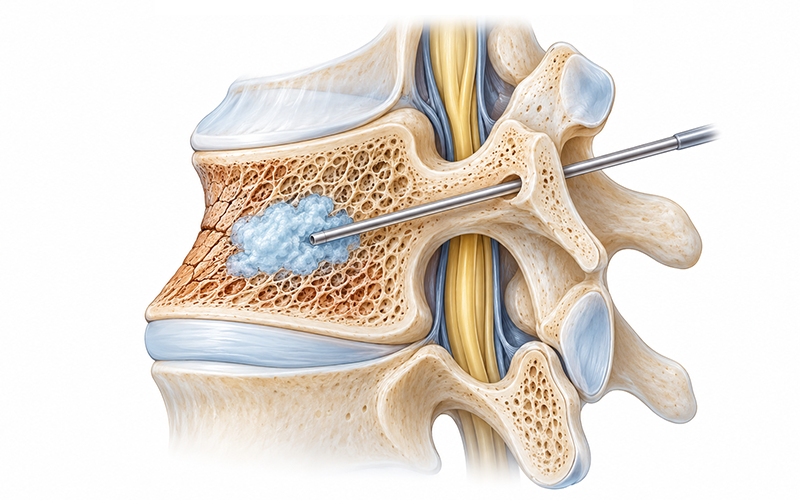
Percutaneous vertebroplasty (PVP) is an image-guided procedure in which medical bone cement is injected into a fractured vertebral body. Its aim is to stabilize the treated fracture and relieve fracture-related pain in appropriately selected patients.[1]
The name describes the approach: “percutaneous” means through the skin, while “vertebroplasty” refers to treatment of the vertebral body.
PVP is one option within vertebral compression fracture treatment. It is not a general treatment for back pain, and its benefits should not be assumed for every patient. Assessment of the fracture, discussion of alternatives and continuing bone-health care remain essential.
What Is a Vertebral Compression Fracture?
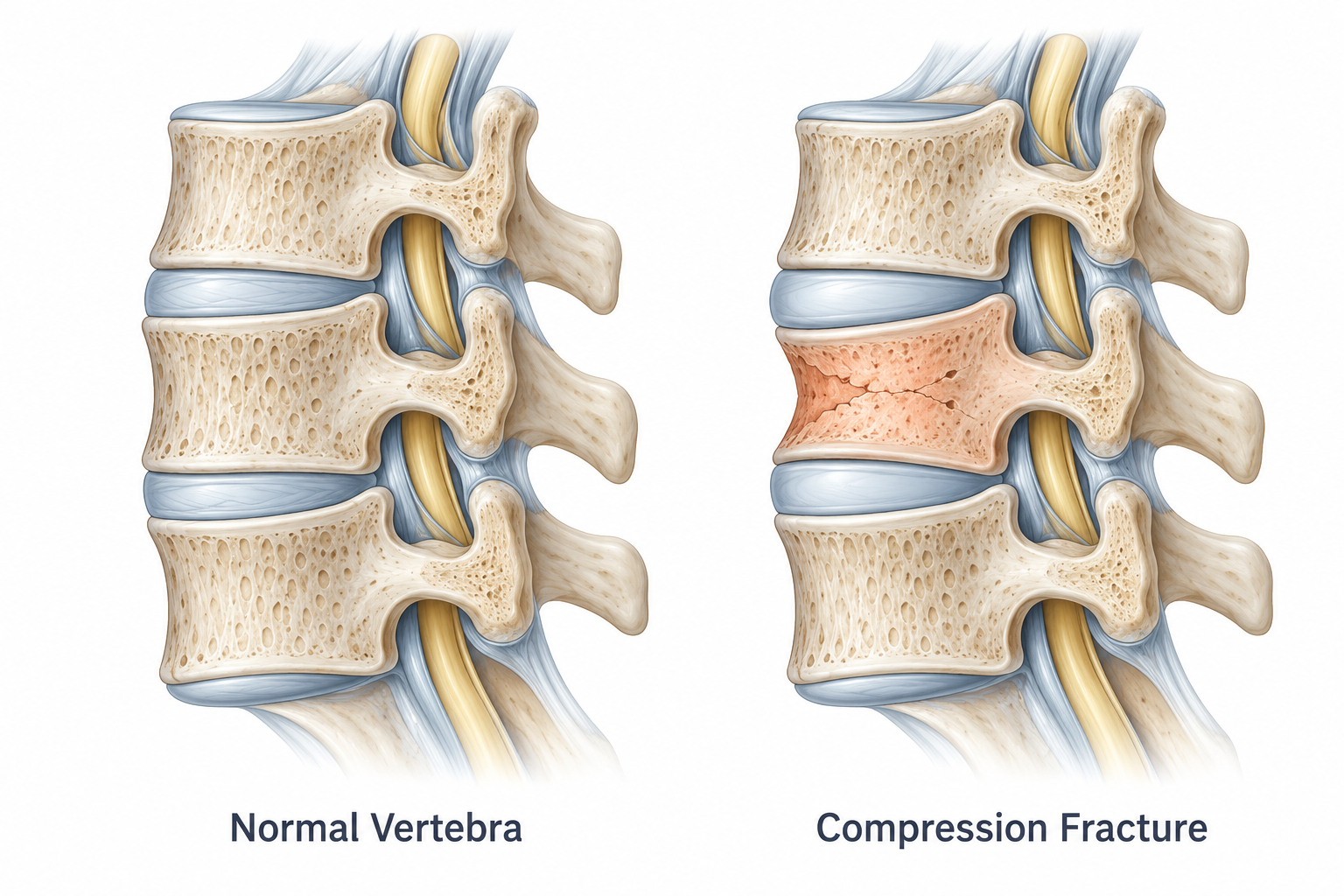
A vertebral body is the substantial, weight-bearing part of a spinal bone. A compression fracture occurs when it collapses or loses height.
Osteoporosis can weaken this structure, allowing a fracture to occur under loads that healthy bone would normally tolerate. Other causes, including cancer-related weakening, require their own assessment. A fracture can produce localized back pain and affect posture or mobility, but symptoms vary.[2]
An imaging finding alone does not establish the cause of a person’s pain. The clinical examination and imaging need to be interpreted together.
Who Might Be Considered for PVP?
Not everyone with a spinal compression fracture needs vertebroplasty. Treatment can include pain management, appropriate movement or rehabilitation, selected use of a brace and management of the underlying condition.[3]
For osteoporotic vertebral compression fractures, NICE identifies PVP as an option for a restricted group: people with severe, persistent pain from a recent, unhealed fracture despite optimal pain management, where examination and imaging confirm pain at the fracture level.[4]
These criteria are not a self-diagnosis checklist. The treating team also considers the fracture pattern, medical conditions and procedural risks. Recommendations and available treatments may differ between healthcare systems.
Does Vertebroplasty Always Provide Pain Relief?
No. The evidence needs a balanced explanation.
A Cochrane review published in 2018 found no clinically important benefit over a sham procedure for routine treatment of acute or subacute osteoporotic vertebral fractures. This means improvement after treatment cannot automatically be attributed to cement injection itself.[5]
NICE nevertheless permits consideration in the selected circumstances described above. Professional guidance also differs: the 2024 UK osteoporosis guideline does not support routine vertebroplasty or balloon kyphoplasty because benefits have not been consistent.[4,6]
The practical message is to discuss the evidence, expected benefit, alternatives and uncertainty for the individual case. PVP should not be advertised as a guaranteed cure or as necessary for every compression fracture.
How Does the PVP Procedure Work?
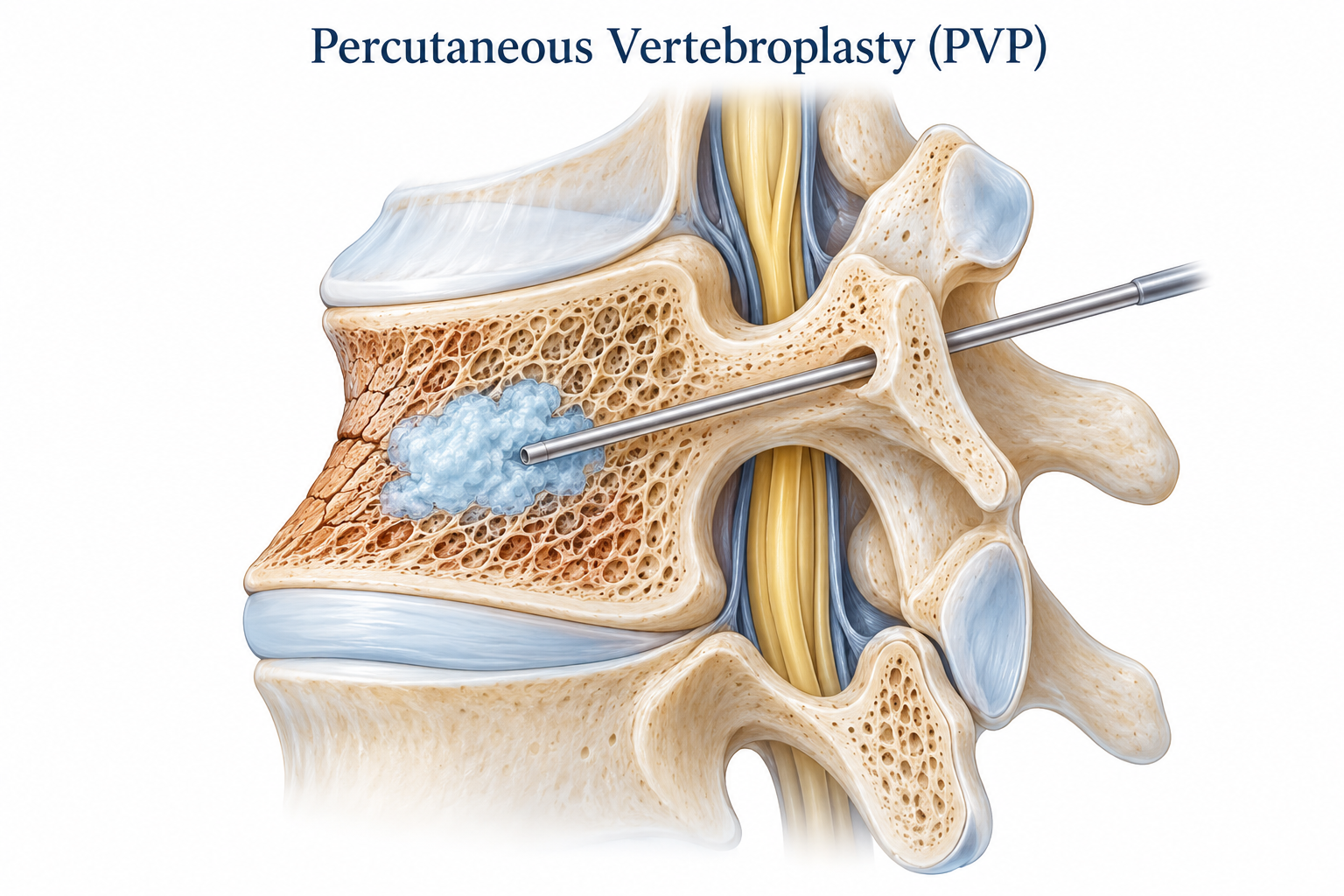
In broad terms, the clinician uses imaging to guide access to the fractured vertebra and deliver bone cement through a needle. The cement hardens within the treated bone.[1]
This is a description of the principle, not an operating technique. Access planning, anesthesia, cement handling and delivery are clinical decisions.
The treatment concerns the fractured vertebral body. It does not replace an intervertebral disc or function as a spinal decompression operation.
Vertebroplasty vs Kyphoplasty: What Is the Difference?
Both procedures belong to the broader category of vertebral augmentation, but their equipment and preparation differ.[1]
| Feature |
PVP: vertebroplasty |
Balloon kyphoplasty, often called PKP |
| Basic principle |
Cement is delivered into the fractured vertebral body |
A balloon is used before cement delivery |
| Balloon step |
Not part of conventional PVP |
Creates a cavity and may help recover some height |
| Cement placement |
Into the treated vertebra |
Into the prepared space after balloon removal |
| Selection |
Requires individual clinical assessment |
Requires individual clinical assessment |
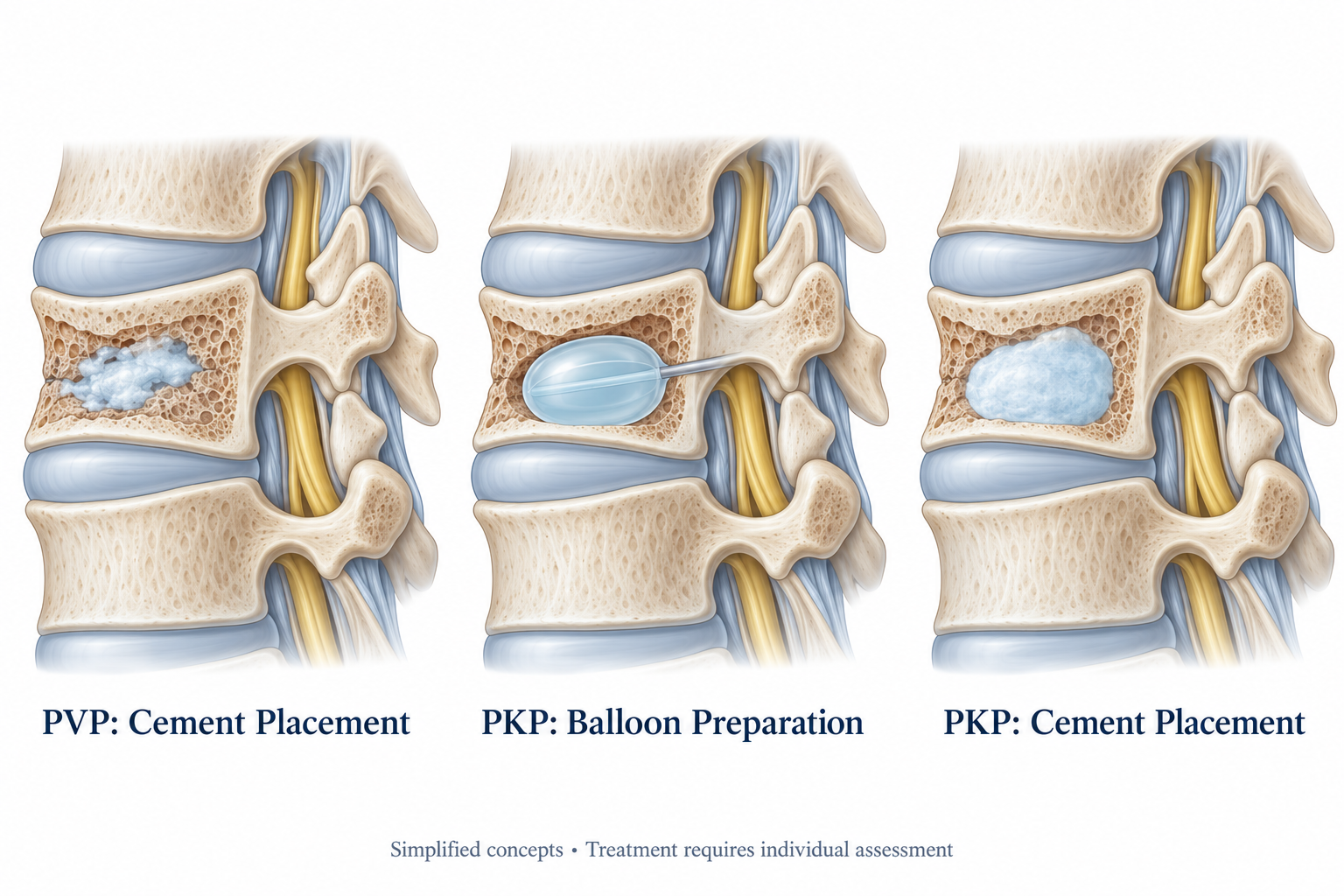 PKP should not be presented as automatically better, nor should restoration of vertebral height be guaranteed. The appropriate option depends on the patient and fracture.
What Equipment Is Used for Vertebroplasty?
Clinical imaging and monitoring equipment are required alongside the access and cement-delivery components. A product described as a “vertebroplasty system” does not necessarily include every item needed for the procedure.
When reviewing a supply proposal, distinguish between these categories:
| Equipment category |
Information to confirm |
| Vertebral access instruments |
Product references, dimensions and documented intended use |
| Cement preparation and delivery components |
Supply scope and compatibility with the selected cement |
| Bone cement |
Whether separately supplied and approved for the intended application |
| Balloon-related equipment |
Whether the quotation concerns balloon kyphoplasty rather than PVP |
| Other clinical equipment |
Items the facility must provide separately |
Hospitals and distributors can explore the Davin Med Vertebroplasty System as a starting point for a configuration-specific enquiry. Request the current component list, relevant instructions and clear identification of separately supplied items.
A procurement checklist cannot establish that an instrument or cement is suitable for a particular patient.
What Happens Before Treatment?
Evaluation may involve a medical history, examination and imaging such as X-rays, MRI or CT. The purpose is to understand the fracture and whether it explains the symptoms.[3]
The team also needs information about medications, bleeding risks, allergies and other medical conditions. Patients should follow their own facility’s instructions on preparation and medicines rather than changing treatment based on a general article.
Useful questions include:
- Which fracture is thought to be causing the pain?
- What alternatives are available?
- Why is vertebroplasty being considered in this case?
- What benefit is realistic, and what remains uncertain?
- What continuing care will the underlying bone condition require?
What Are the Risks?
Potential problems include cement leakage, infection, bleeding, persistent or worsening pain and injury to nearby structures. Cement entering an important space or blood vessel can cause serious complications. The individual risk depends on the condition and treatment.[7]
The clinician should explain these issues alongside the expected benefit. A small skin opening does not mean the procedure is risk-free.
PVP also cannot guarantee that pain will disappear or that another vertebral fracture will not occur.
Recovery After Vertebroplasty
Discharge and activity plans depend on the patient, the procedure and the facility’s assessment. Some patients go home the same day; others need observation or admission. Pain response also varies.[7]
Recovery instructions should explain movement, wound care, medication and follow-up. Patients should not use a general online timeline as permission to resume heavy lifting or unrestricted activity.
New weakness, loss of bladder or bowel control, chest pain or breathing difficulty requires urgent medical assessment.
Why Bone-Health Care Still Matters
Stabilizing a fracture does not treat the underlying osteoporosis. A longer-term plan may include bone-health assessment, medication where appropriate, nutrition, suitable exercise and fall prevention.[8]
A useful distinction is that fracture treatment addresses the current injury, while osteoporosis management aims to reduce future fracture risk. Both may be needed.
Frequently Asked Questions
1. What does PVP stand for?
PVP stands for percutaneous vertebroplasty.
2. Is PVP used for all types of back pain?
No. It concerns selected vertebral fractures, not every cause of back pain.
3. Does vertebroplasty use a balloon?
Conventional vertebroplasty does not. Balloon kyphoplasty uses a balloon before cement placement.[1]
4. Is bone cement the same as a bone graft?
No. Bone cement is a different material. The treating team determines the appropriate material and application.
5. Does every osteoporotic compression fracture require PVP?
No. Many patients are managed without vertebral augmentation. Treatment requires individual assessment.[3,4]
6. Can PVP cure osteoporosis?
No. Osteoporosis requires its own assessment and management.[8]
7. Is immediate pain relief guaranteed?
No. Treatment responses vary, and the evidence does not support assuming a meaningful benefit for every patient.[5,7]
8. Is a balloon included in every vertebroplasty kit?
No. Confirm whether the quotation is for PVP, balloon kyphoplasty or a broader supply package.
9. What should equipment buyers ask Davin Med?
Request the exact configuration, component references, compatible cement-delivery information, applicable documentation and clarification of what is excluded.
10. Can a kit description determine whether surgery is suitable?
No. A product description provides equipment information; suitability for treatment requires clinical assessment.
Understanding PVP Before Reviewing a System
Percutaneous vertebroplasty is a specific intervention for a fractured vertebral body, with an intended role in selected patients rather than routine treatment of every spinal fracture.
For professional equipment enquiries, visit the Davin Med Vertebroplasty System product page and request a current proposal for the intended application.
This article provides general education, not an individual treatment recommendation. Clinical decisions and device use require qualified professional assessment and the applicable instructions.
References
- RadiologyInfo: Vertebroplasty and Kyphoplasty
- AAOS OrthoInfo: Osteoporosis and Spinal Fractures
- Johns Hopkins Medicine: Vertebroplasty
- NICE TA279: Recommendations
- Cochrane: Vertebroplasty for treating spinal fractures due to osteoporosis
- The 2024 UK clinical guideline for the prevention and treatment of osteoporosis
- Mayo Clinic: Vertebroplasty
- NIAMS: Osteoporosis—Diagnosis, Treatment, and Ste